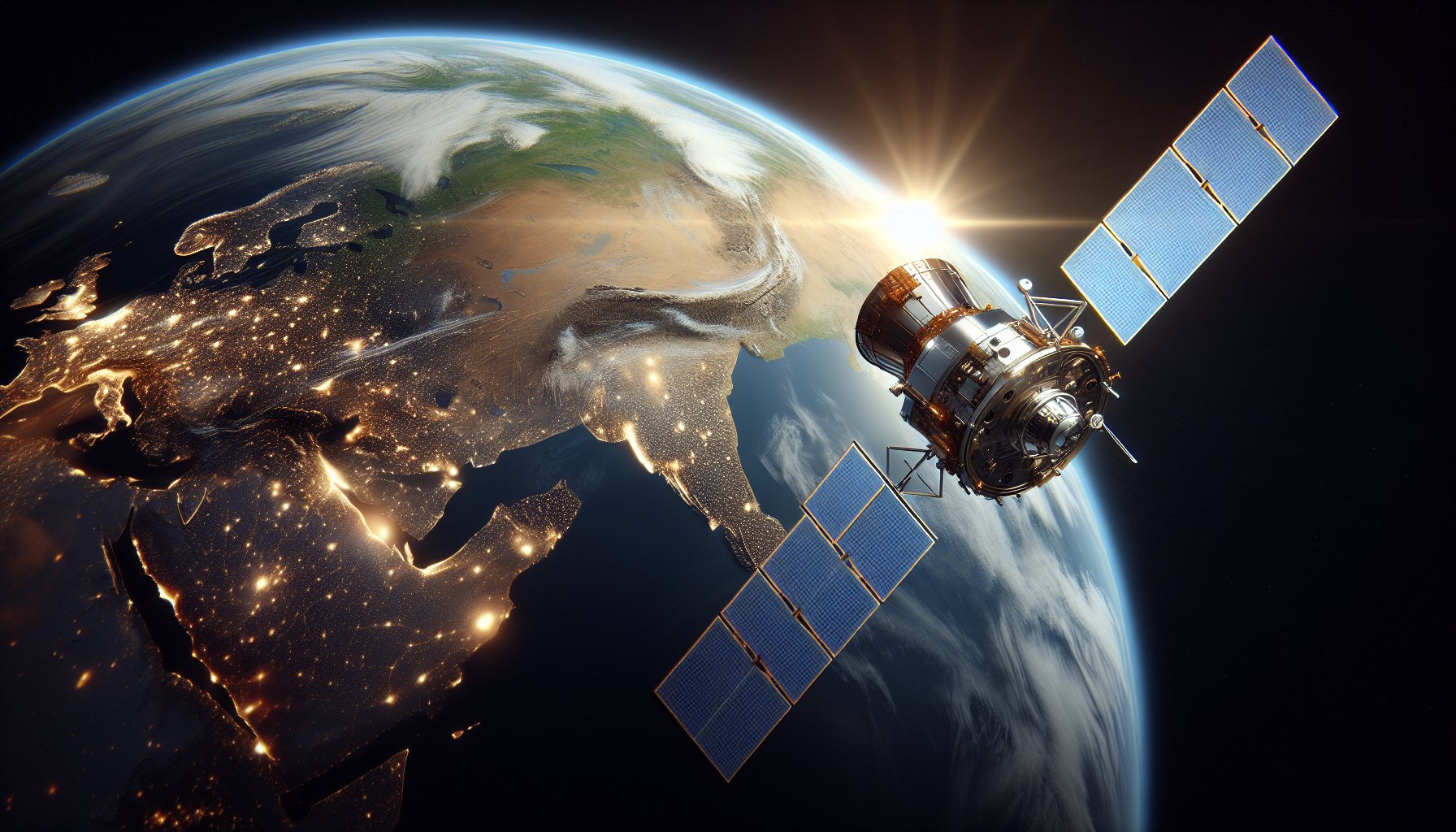
SpaceX's Starlink Armada Grows: A Fiery Ascent from Vandenberg
In the golden haze of a California afternoon, a Falcon 9 rocket pierced the sky, its engines roaring to life like a mechanical beast awakening. On March 26, 2026, SpaceX added another chapter to its cosmic saga, launching 25 Starlink satellites from Vandenberg Space Force Base. But this wasn't just another routine blastoff—it was a testament to relentless innovation, delayed by two tense days of preparations, and culminating in a flawless orbital delivery.
Liftoff and the Dance of Deployment
The mission, dubbed Starlink 17-17, kicked off at 4:03 p.m. PDT from Space Launch Complex 4 East. The rocket arced southward, carving a path toward polar orbits that few other sites can match. An hour later, confirmation came: all 25 satellites had separated successfully, joining the ever-expanding Starlink constellation designed to beam broadband internet to the world's remotest corners.
What caused the two-day slip from the original March 24 target? SpaceX cited routine payload and vehicle checks, but the delay only heightened anticipation. When the moment arrived, the reusable first-stage booster, B1081, performed its role with veteran precision. Just 8.5 minutes after launch, it touched down gently on the drone ship Of Course I Still Love You—a floating platform bobbing in the Pacific. This marked B1081's 23rd flight and SpaceX's 591st booster landing overall, a number that underscores the company's audacious bet on reusability.
A Booster with a Resume to Rival Astronauts
B1081 isn't some fresh-off-the-assembly-line newcomer. It first roared into space in August 2023, ferrying the Crew-7 mission to the International Space Station. Since then, this workhorse has clocked missions like CRS-29, PACE, Transporter-10, EarthCARE, NROL-186, Transporter-13, TRACERS, NROL-48, COSMO-SkyMed FM3, and a dozen Starlink batches. Each flight etches deeper grooves into its titanium grid fins, turning what was once cutting-edge hardware into a battle-tested relic of the reusable rocket era.
The drone ship's 186th catch? Just another day at the office for Of Course I Still Love You, which patrols the Pacific for these southerly launches. Vandenberg's unique geography favors such trajectories, steering clear of populated areas and enabling orbits at 53-degree inclinations—perfect for blanketing the globe with connectivity.
Echoes of Recent Triumphs
This launch fits neatly into SpaceX's West Coast rhythm. Flash back to May 31, 2025: Under a veil of fog, booster B1071—on its 25th outing—lofted 27 Starlink V2 Mini satellites from the same pad at 1:10 p.m. PDT, with a drone ship snag eight minutes later. Or consider November 23, 2025, when fresh-faced booster B1100 made its debut, hurling 28 satellites skyward at 12:48 a.m. PST on a southeasterly path. As the eighth new booster in SpaceX's 2025 lineup, it signaled the company's unyielding push for fleet expansion.
East Coast operations provide a counterpoint. On December 2, 2025, Starlink 6-95 deployed 29 satellites from Cape Canaveral's Launch Complex 40 at 5:18 p.m. EST. Earlier, on November 14, Starlink 6-89 sent another 29 aloft from Kennedy Space Center's Pad 39A at 10:08 p.m. EST. SpaceX's May 2025 frenzy alone saw 16 Falcon 9 launches, capping the month with Starlink 11-18 from Vandenberg. As Spaceflight Now put it, the company "closed out May with its 16th Falcon 9 launch of the month"—a pace that leaves competitors gasping.
The Bigger Picture: Reusability and Revolution
With Starlink now boasting over 10,000 satellites, SpaceX is reshaping global internet access, serving underserved regions and squaring off against rivals like Amazon's Kuiper and OneWeb. Each mission, costing around $30 million, owes its affordability to reusability—an 80% reuse rate since drone ship ops began in 2016. These savings fuel grander visions, from Mars colonization to beyond.
Vandenberg, under U.S. Space Force watchful eyes, has hosted Starlink flurries since 2023, alongside classified payloads like NROL-186. Southerly paths demand drone ship recoveries, a strategy honed in 2025 missions. Industry watchers predict SpaceX could hit 100 Falcon 9 flights annually, eclipsing expendable rockets from outfits like United Launch Alliance or Ariane.
Uncertainties linger—exact satellite versions for Starlink 17-17 remain unconfirmed, though V2 Minis dominated prior batches. The UTC timestamp sparked brief confusion (listed as 23:03:19 on March 26, possibly misread as March 23), but post-launch verifications from trackers like Jonathan's Space Report affirmed success. No anomalies marred the event, extending SpaceX's streak of seamless operations.
Toward an Interconnected Horizon
As the sun set on Vandenberg's launch pads, Starlink 17-17 stood as more than a data point—it's a brick in the foundation of a connected planet. With over 350 orbital missions in 2025 paving the way, SpaceX's 2026 cadence promises even bolder strides. In an era where space is no longer the final frontier but a bustling highway, these incremental victories remind us: the stars are getting closer, one reusable rocket at a time.


