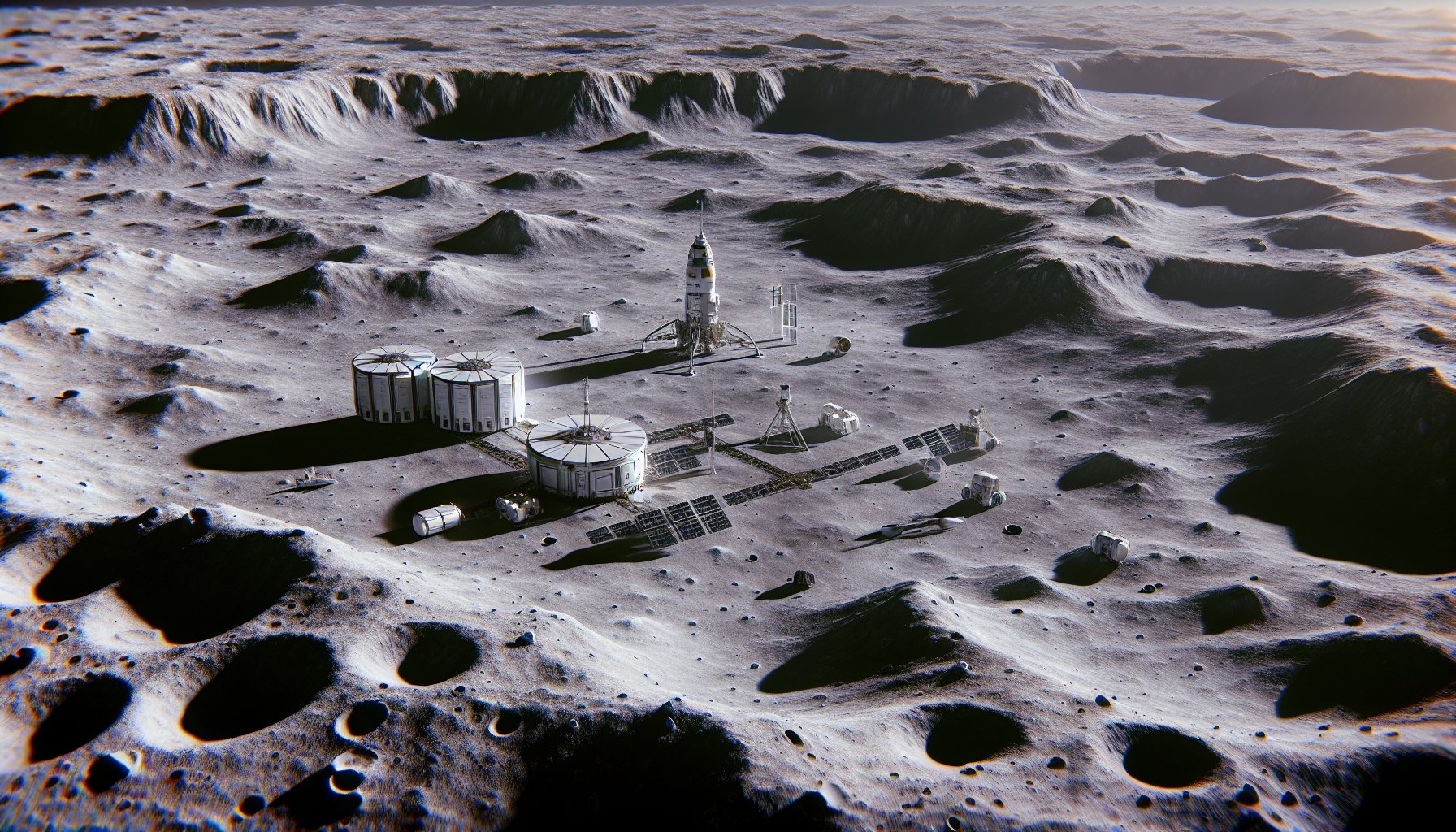
Amid the icy enigmas of our solar system, NASA's Europa Clipper mission launched in October 2024, targeting Jupiter's moon Europa with an arsenal of sophisticated instruments designed to probe its subsurface ocean. This ambitious endeavor, part of NASA's Outer Planets Exploration program, aims to assess Europa's habitability by investigating the thickness of its ice shell, the composition of its ocean, and potential plumes ejecting water vapor into space.
Drawing from data gathered by the Galileo spacecraft in the 1990s, which hinted at a vast liquid water reservoir beneath the moon's fractured surface, Europa Clipper will conduct 49 flybys without landing, minimizing contamination risks while maximizing data collection. At the core of the mission's objectives is the search for biosignatures, focusing on key ingredients for life: liquid water, organic compounds, and energy sources.
Instruments like the Europa Imaging System (EIS) will map the surface at resolutions down to 1 meter per pixel, revealing geological features such as chaos terrain and linear ridges that suggest ongoing tectonic activity. The Radar for Europa Assessment and Sounding: Ocean to Near-surface (REASON) will penetrate the ice with dual-frequency radar, estimating shell thickness—potentially 10-30 kilometers—and detecting subsurface interfaces.
Complementary tools, including the Mass Spectrometer for Planetary Exploration/Europa (MASPEX) and the Surface Dust Analyzer (SUDA), will analyze atmospheric particles and plume ejecta for salts, organics, and isotopic ratios, providing clues about ocean chemistry and hydrothermal vents akin to Earth's deep-sea ecosystems.
Technologically, Europa Clipper incorporates radiation-hardened electronics to withstand Jupiter's intense magnetosphere, which bombards the moon with high-energy particles at rates orders of magnitude higher than Earth's Van Allen belts. The spacecraft's vault-like shielding protects sensitive avionics, while solar arrays generate power in the dim Jovian environment, 5.2 astronomical units from the Sun.
Propulsion relies on a gravity-assist trajectory, having slingshotted past Mars in 2025 and planned to pass Earth in 2026 to reach Jupiter by 2030, optimizing fuel efficiency for its four-year orbital phase. The mission's significance extends beyond astrobiology, offering insights into icy world dynamics applicable to Enceladus, Ganymede, and exoplanets detected by telescopes like the James Webb Space Telescope.
By confirming Europa's ocean as a potential habitat, it could redefine our place in the cosmos, informing future lander missions and emphasizing the need for planetary protection protocols. In an era of expanding space exploration, Europa Clipper underscores the interplay between technological innovation and scientific discovery, potentially answering whether life exists beyond Earth.


