Let's be honest: In a space race dominated by superpowers slinging billions at rockets and rovers, the United Arab Emirates pulling off a flawless Mars orbit insertion on their first try feels like the plot of a plucky indie film. You know, the one where the underdog nation, fresh off oil riches, skips the kiddie pool of low-Earth orbit and cannonballs straight into deep space. That's the Emirates Mars Mission's Hope Probe—Al-Amal in Arabic—for you. Launched in 2020 amid a global pandemic, it didn't just survive the journey; it thrived, snapping pics of Martian auroras that make NASA's old snapshots look like grainy Polaroids. But here's my thesis, clear as a desert sky: The Hope Probe isn't just a win for the UAE; it's a blueprint for how smart collaboration can democratize space exploration, turning what could have been a vanity project into a genuine contributor to our understanding of the Red Planet's vanishing atmosphere. Backed by facts, not hype, this mission proves that in the new space age, partnerships trump rivalries—especially as tensions heat up between the U.S., China, and everyone else eyeing Mars. Flash back to 2014. The UAE, a federation barely older than my favorite sci-fi franchises, announces it's gunning for Mars. No prior planetary missions, no decades of rocket failures to learn from—just sheer ambition tied to their Vision 2021 plan for a post-oil economy. Think about it: While Elon Musk was tweeting about colonizing Mars and NASA was prepping Perseverance, the Mohammed bin Rashid Space Centre (MBRSC) was quietly assembling a team of about 200 Emiratis, many trained at U.S. universities like the University of Colorado Boulder and UC Berkeley. They weren't reinventing the wheel; they were leapfrogging. By 2020, they'd built the Hope Probe, a 1,350-kilogram spacecraft packed with 800 kg of hydrazine fuel, two solar arrays cranking out 1,800 watts, and dimensions that make it sound like a compact SUV (2.37 meters high by 2.90 meters wide). It hitched a ride on Japan's H-IIA rocket from Tanegashima Space Center on July 20, 2020—July 19 if you're on Pacific Daylight Time, because time zones love to mess with space nerds. The launch itself was a nail-biter, squeezed into a July 14-31 window and delayed by COVID-19 chaos. The probe shipped to Japan in June 2020 after U.S. environmental tests, all while the world was locking down. Yet, they nailed it on schedule. Seven months later, on February 9, 2021 (or 10th, depending on your clock), Hope executed a 27-minute thruster burn to slip into a highly elliptical orbit around Mars—55 hours per lap, no room for error. Remember the 1999 Mars Climate Orbiter fiasco, where a units mix-up turned a NASA probe into cosmic confetti? The UAE team rehearsed their autonomous insertion like it was a Broadway opening night, avoiding that pitfall entirely. Timed for the UAE's 50th anniversary, it was poetic: a nation born in 1971 celebrating by orbiting another world. Now, the science. Hope's not there to plant flags or drill for water; it's all about the atmosphere. The probe's primary goals? Mapping global weather dynamics, profiling the lower atmosphere's layers, and tracking how hydrogen and oxygen escape into space—key culprits in Mars' climate loss over eons. Unlike previous missions that offered snapshots, Hope provides a full Martian year (about 687 Earth days) of data, capturing diurnal and seasonal shifts. It's like upgrading from a flip phone camera to 4K— the first complete picture of Mars' atmospheric layers. Early wins include images of "discrete auroras," those eerie, disconnected glows caused by solar particles slamming into the planet's magnetic anomalies. Not the full-spectrum Northern Lights we get on Earth, but Martian enough to geek out over. And get this: The mission's still chugging along, clocking over 1,790 days as of recent updates, with no reported failures. But what elevates Hope from a national flex to a global asset is the collaboration. This isn't some isolated ego trip; it's a masterclass in international teamwork. MBRSC led with 100% Emirati management, but they partnered with heavy hitters: The Laboratory for Atmospheric and Space Physics (LASP) at CU Boulder handled mission ops and science; UC Berkeley's Space Sciences Lab contributed instruments and training; Arizona State University designed key analyzers for particles and gases. Japan provided the launch via JAXA, and in April 2022, NASA inked a data-sharing deal with their MAVEN orbiter. As NASA put it in a quote that's equal parts diplomatic and exciting: "MAVEN and Hope are paving the way toward greater scientific collaboration and data exchange." This pact merges datasets, boosting insights into atmospheric escape—crucial for modeling why Mars went from potentially habitable to a dusty wasteland. In an era where space is getting crowded (hello, China's Tianwen-1 and India's Mangalyaan), this kind of sharing counters the zero-sum vibes of the U.S.-China rivalry. Let's zoom out for industry context. The UAE joins an elite club—now around 10 nations with active Mars exploration, including the U.S., Russia, China, India, Europe, and Japan. But unlike veterans who've racked up failures (Russia's Phobos-Grunt belly-flop in 2011 comes to mind), the UAE aced it on debut. It's a "David vs. Goliath" tale, as my research notes aptly frame it, echoing broader Gulf trends. Saudi Arabia and Qatar are dipping toes into space too, but the UAE's leading the pack, building on programs like sending astronaut Sultan Al Neyadi to the ISS in 2023. This fits the post-Artemis landscape, where NASA's pushing international alliances for lunar returns, while private players like SpaceX dream of Mars cities. Hope's success underscores a shift: Space isn't just for Cold War holdovers anymore. Emerging players can contribute meaningfully by focusing on niches—like atmospheric science—rather than trying to outdo rover fleets. And amid tensions, like U.S. export controls on China, Hope's U.S. partnerships show collaboration can thrive without geopolitics derailing everything. Of course, it's not all starry-eyed optimism. Critics might scoff that this is petrodollar showmanship, but facts say otherwise. The UAE invested in human capital, training hundreds of scientists and engineers, fostering a knowledge economy. It's inspirational for Arab youth—think of it as the space equivalent of that viral meme where a kid from nowhere becomes a tech mogul. Nature.com nailed it back in 2019: "The Arab world will launch its first mission to Mars." They did, and it worked. Sure, gaps remain: We don't have exhaustive post-2022 science papers yet, or precise fuel status for extensions. But the mission's ongoing, filling data holes that even NASA's MAVEN couldn't cover alone. Here's the thing nobody wants to admit: In a world fixated on Mars sample returns and human landings, Hope's quiet revolution is underappreciated. It's not flashy like Perseverance's helicopter buddy, Ingenuity, but it's foundational. By quantifying gas escape, it informs habitability models—did Mars once host life? Could it again? This ties into bigger questions as we eye exoplanets. Looking forward, Hope's legacy ripples outward. The UAE's eyeing lunar missions and more Mars shots, potentially aligning with Artemis accords for multinational moon bases. Globally, it sets a precedent: Data-sharing like the MAVEN pact could become the norm, accelerating discoveries amid budget crunches. Imagine if China's Zhurong rover data flowed freely— we'd crack Mars' secrets faster. For the UAE, it's about inspiring a generation; for the world, it's a reminder that space is collaborative, not combative. As we hurtle toward the 2030s' Mars rush, Hope proves you don't need a superpower budget to make history. You just need vision, partners, and a probe named after optimism. In a universe of uncertainties, that's a launch worth celebrating.
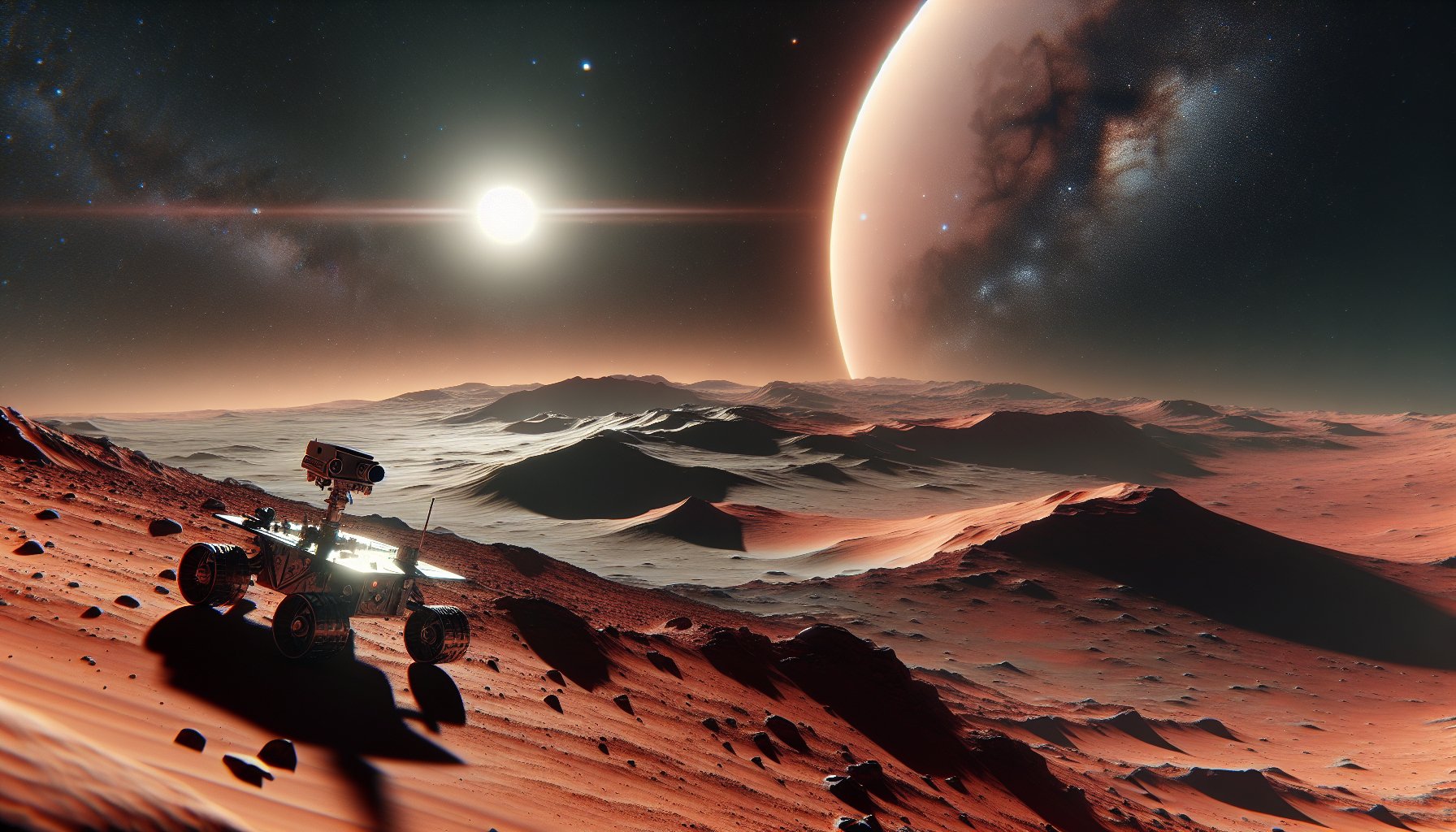
Emirates Mars Mission - Hope Probe


