
In a bold stride towards cementing its status as a global space superpower, China has announced plans for the debut of its Long March 10 rocket in 2026. Designed to support both crewed lunar missions and low Earth orbit (LEO) operations, this heavy-lift launch vehicle represents a critical milestone in China’s ambitious space exploration agenda. As reported by SpaceNews, the Long March 10 is poised to play a pivotal role in China’s plans to land astronauts on the Moon before the end of this decade.
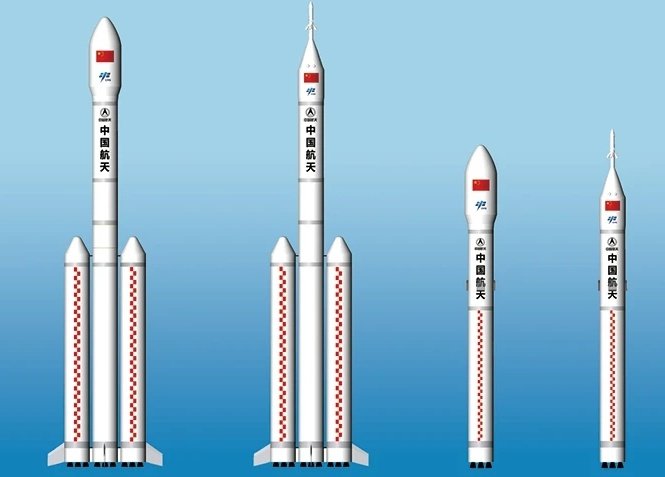
This article delves into the technical specifications of the Long March 10, its historical context within China’s space program, the broader implications for the global space industry, and what the future might hold for this groundbreaking rocket.
The Long March 10: Technical Overview
The Long March 10, also referred to as Chang Zheng 10, is a next-generation heavy-lift rocket under development by the China Academy of Launch Vehicle Technology (CALT). It is being designed to meet the demanding requirements of crewed lunar missions, a significant step up from China’s current fleet of Long March rockets. While specific details remain closely guarded, initial reports and official statements provide a glimpse into its capabilities.
- Payload Capacity: The Long March 10 is expected to carry up to 27 metric tons to trans-lunar injection (TLI), the trajectory needed to reach the Moon, and approximately 70 metric tons to LEO. This makes it comparable to heavy-lift rockets like SpaceX’s Falcon Heavy and NASA’s Space Launch System (SLS).
- Configuration: The rocket will likely feature a modular design with a core stage powered by multiple YF-100K engines, which use liquid oxygen and kerosene as propellants. Booster stages are expected to enhance its lifting power for lunar missions.
- Crewed Capabilities: Unlike its predecessors, the Long March 10 is being developed with human spaceflight safety standards in mind, incorporating escape systems and redundancy to ensure astronaut safety during launch.
The rocket will launch from the Wenchang Satellite Launch Center in Hainan, China’s primary site for heavy-lift missions due to its proximity to the equator, which provides a natural boost from Earth’s rotational speed. As depicted in imagery from recent Long March 5 launches at Wenchang, the facility is well-equipped to handle the intense demands of such powerful rockets.
Historical Context: China’s Lunar Ambitions
China’s space program, managed by the China National Space Administration (CNSA), has seen remarkable progress over the past two decades. From the first crewed mission in 2003 with the Shenzhou spacecraft to the successful Chang’e lunar exploration missions, including the historic sample return from the Moon’s far side in 2024, China has steadily built its expertise and infrastructure.
The Long March 10 is a direct descendant of the Long March 5, China’s current heavy-lift rocket, which has been instrumental in launching modules for the Tiangong space station and lunar probes. However, the Long March 5 lacks the capacity and safety features needed for crewed lunar missions, necessitating the development of the Long March 10. This new rocket aligns with China’s broader goal of achieving a crewed lunar landing by 2030, a target announced as part of its partnership with Russia to establish the International Lunar Research Station (ILRS).
Historically, China’s space endeavors have been driven by a mix of national pride and strategic objectives. A successful Long March 10 debut would not only mark a technological triumph but also position China as a direct competitor to the United States in the renewed race to the Moon, reminiscent of the Cold War-era space race.
Industry Implications: A New Player in Heavy-Lift Launch
The introduction of the Long March 10 has far-reaching implications for the global space industry. For one, it intensifies the competition in the heavy-lift launch market, where SpaceX’s Falcon Heavy and NASA’s SLS currently dominate. While SpaceX has revolutionized the sector with reusable rockets and cost-effective launches, China’s state-backed approach offers an alternative model, potentially driving down costs through economies of scale and government subsidies.
Moreover, the Long March 10 could enable China to offer launch services for international partners, especially those involved in the ILRS project. This would expand China’s influence in space diplomacy, countering initiatives like NASA’s Artemis Accords, which aim to establish norms for lunar exploration under a U.S.-led framework.
From a technical perspective, the Long March 10’s development highlights China’s growing expertise in advanced propulsion and spacecraft design. If successful, it could pave the way for even more ambitious projects, such as crewed missions to Mars or the construction of large-scale lunar infrastructure.
Expert Analysis: Challenges and Opportunities
As an analyst covering the space industry, I see the Long March 10 as both a technological gamble and a strategic masterstroke. Developing a heavy-lift rocket for crewed missions is no small feat—NASA’s SLS program, for instance, has faced years of delays and budget overruns. China will need to overcome significant engineering hurdles, including ensuring the reliability of its propulsion systems and the safety of its crew escape mechanisms.
One potential challenge lies in the YF-100K engines, which, while powerful, are relatively new and lack the extensive flight heritage of engines like the Russian RD-180 or SpaceX’s Merlin. Any failures during test flights could delay the 2026 debut and impact China’s lunar timeline.
On the flip side, China’s space program benefits from centralized planning and substantial government funding, allowing for rapid iteration and risk-taking that commercial entities might avoid. If the Long March 10 succeeds, it could serve as a blueprint for other nations looking to develop their own heavy-lift capabilities, reshaping the geopolitical dynamics of space exploration.
Future Outlook: Beyond 2026
Looking ahead, the Long March 10’s debut in 2026 will be a litmus test for China’s lunar aspirations. A successful launch would likely be followed by test missions to validate its crewed capabilities, potentially involving orbital flights with the next-generation Shenzhou spacecraft or lunar orbit missions as precursors to a landing.
Beyond lunar exploration, the rocket’s high LEO payload capacity could support the expansion of the Tiangong space station or the deployment of large-scale satellite constellations, positioning China as a leader in space-based infrastructure. There’s also the possibility of adapting the Long March 10 for deep-space missions, aligning with China’s long-term vision of exploring Mars and beyond.
However, the global response to China’s advancements will be equally critical. The U.S. and its Artemis partners may accelerate their own lunar programs to maintain a competitive edge, while other nations might seek to align with China’s ILRS initiative. This could lead to a bifurcated lunar economy, with competing standards and infrastructures on the Moon.
Conclusion: A New Chapter in Space Exploration
China’s Long March 10 rocket represents more than just a new launch vehicle—it’s a symbol of the country’s determination to shape the future of space exploration. With its planned debut in 2026, the rocket will test the limits of China’s technological prowess and set the stage for a crewed lunar landing by 2030. As the global space race heats up, the Long March 10 could redefine the balance of power in the final frontier.
For space enthusiasts and industry watchers alike, the coming years promise to be an exciting chapter. Will China achieve its lunar dreams on schedule? How will the international community respond? Only time will tell, but one thing is certain: the Long March 10 is a name to watch.


