NASA's High-Stakes Dilemma: A Medical Mystery Aboard the ISS
In the vast, unforgiving expanse of low Earth orbit, where every heartbeat echoes in isolation, a single medical issue can upend months of meticulous planning. That's the reality facing NASA's Crew-11 aboard the International Space Station (ISS), as officials weigh an early return for the four astronauts due to an undisclosed health concern. What began as a routine mission has veered into uncertainty, canceling a critical spacewalk and highlighting the razor-thin margins of human spaceflight.
The Incident Unfolds
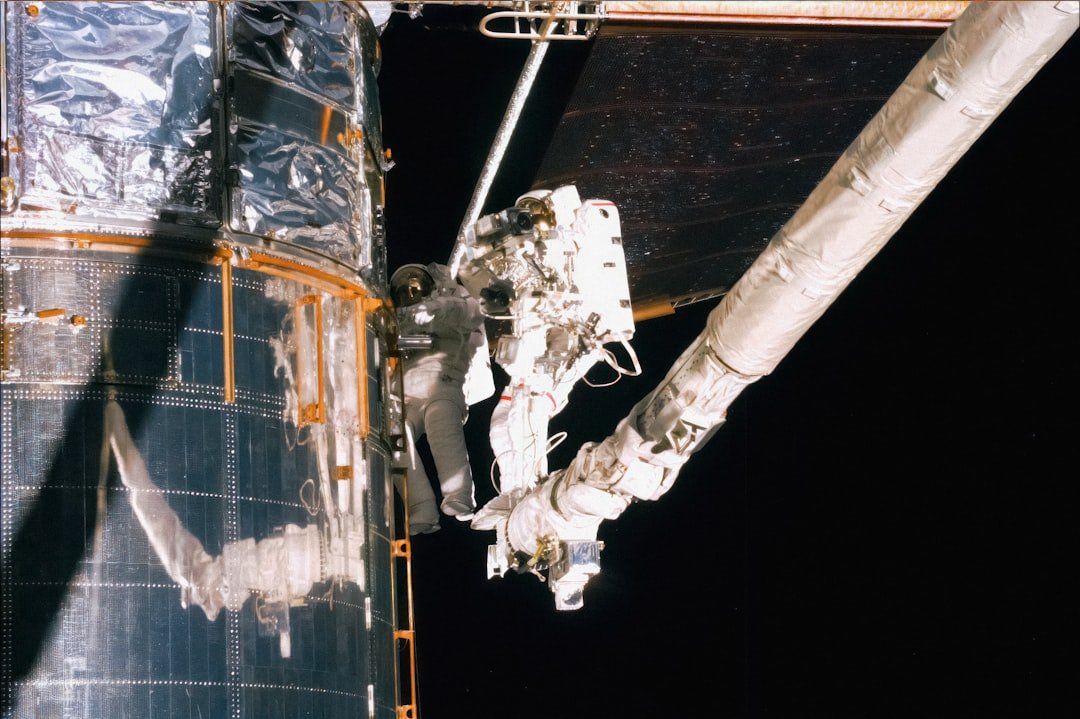
The trouble surfaced on the afternoon of January 7, 2026, amid the hum of life-support systems and the glow of scientific instruments. NASA officials, ever vigilant, announced the next day that the affected astronaut—whose identity remains private—is stable. Yet the severity prompted an immediate halt to a planned extravehicular activity (EVA), or spacewalk, scheduled for 8 a.m. ET on January 8. This wasn't just any outing: astronauts Mike Fincke and Zena Cardman had trained for months, donning bulky suits to install hardware for a new solar array power channel on the station's sun-battered exterior. The task, expected to span 6.5 hours, was deemed too risky under the circumstances.
Crew-11 launched from Florida in August 2025 aboard a SpaceX Crew Dragon, embarking on what was meant to be a standard six-to-eight-month stint. Leading the team is veteran NASA commander Mike Fincke, joined by flight engineer Zena Cardman, JAXA's Kimiya Yui, and Roscosmos cosmonaut Oleg Platonov. Their orbital home, a football-field-sized marvel zipping at 17,500 mph, now hosts a tense evaluation: Could the entire crew cut their mission short, months ahead of the planned May 2026 return?
Weighing the Options
Safety isn't just a priority—it's NASA's north star. "Safely conducting our missions is our highest priority, and we are actively evaluating all options, including the possibility of an earlier end to Crew-11’s mission," a spokesperson told Reuters and NBC News on January 8. Updates were promised within 24 hours, with the agency stressing that the situation involves "a single crew member who is stable." These are the contingencies crews train for relentlessly, from emergency undocking drills to simulated medical crises.
Onboard, the ISS is equipped with basic medications and tools, but it's no floating hospital. Advanced facilities are Earthbound, and privacy protocols shroud details, leaving experts to speculate on the vulnerabilities of long-duration spaceflight. Microgravity gnaws at bones, radiation peppers cells, and isolation amplifies every ache. Historical precedents are rare but telling: Since the ISS's inception in 2000, full-crew evacuations for health reasons have been virtually unheard of. Past emergencies, like appendicitis cases in the 2000s, involved solo returns via Russian Soyuz capsules. More recently, a 2024 spacewalk was scrapped due to spacesuit discomfort, while astronaut Mark Vande Hei endured a record 355-day stay from 2021 to 2022 under intense health scrutiny.
Broader Implications for Space Exploration
An early return wouldn't just disrupt Crew-11's rhythm—it could ripple through the ISS's packed schedule. Power upgrades might stall, science experiments could face delays, and international partners like JAXA and Roscosmos would need to recalibrate. SpaceX's Crew Dragon offers a nimble escape pod, a far cry from the slower Russian rotations of yesteryear, but logistics remain a puzzle: Which vehicle? What timeline?
This episode underscores the inherent perils of humanity's orbital outpost, certified through 2030 but eyeing a handover to private stations like Axiom and Starlab by decade's end. NASA's own studies peg the annual risk of serious medical incidents at 1-2% for long flights, a statistic that fuels preparations for bolder ventures, like Artemis moon missions and eventual Mars treks. Analog simulations, such as the CHAPEA program, mimic these isolation challenges, reminding us that space isn't just about rockets—it's about resilient humans.
As public speculation buzzed on platforms like Reddit, linking to reports from Space.com and NBC, officials urged patience. The story broke early January 8, 2026, with sources converging on the facts: a stable patient, a canceled EVA, and a decision still in flux. Primary accounts emphasize "evaluating" rather than a firm announcement, tempering any rush to conclusions.
In the end, this medical hiccup serves as a stark reminder that space exploration dances on the edge of the unknown. With crews pushing boundaries farther from home, NASA's focus on health isn't just policy—it's the lifeline ensuring that what goes up can come down safely. As we await the next update, expected by January 9 morning EST, one thing is clear: In the cosmos, preparation meets the unpredictable, and humanity's reach depends on both.


