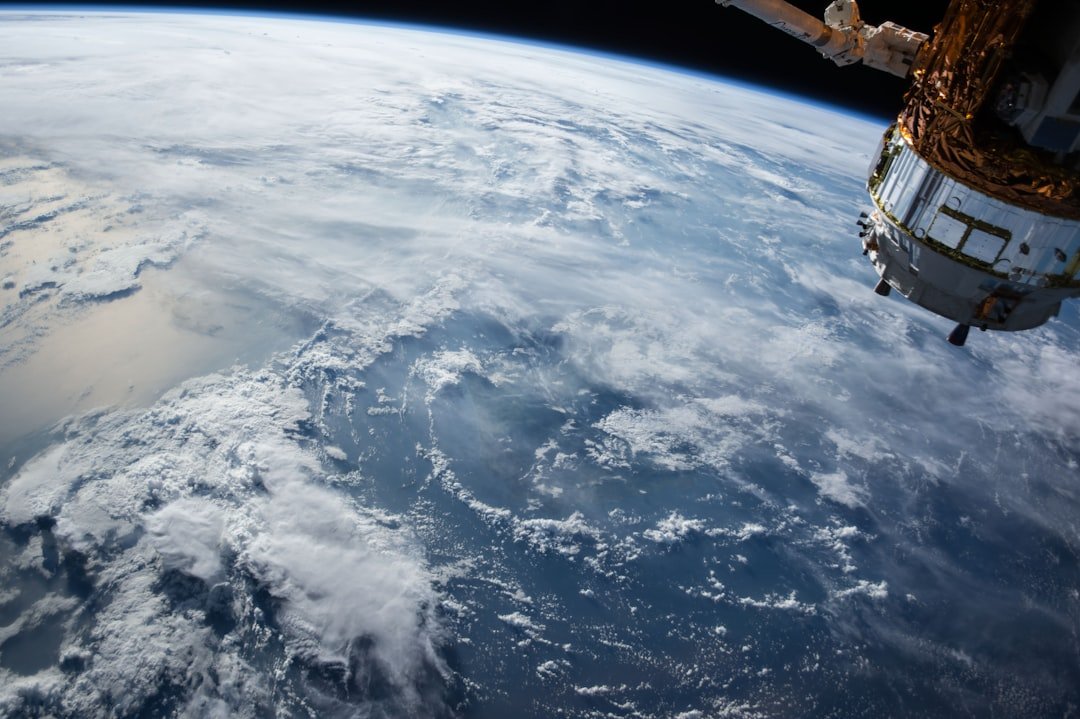
In the steamy predawn hours of August 13, 2025, a thunderous roar shattered the quiet of Europe's Spaceport in Kourou, French Guiana. The Ariane 6 rocket, Europe's gleaming new workhorse, pierced the night sky, carrying aloft the MetOp-SG-A1 satellite—a sentinel poised to revolutionize how we peer into the planet's turbulent atmosphere. This wasn't just another launch; it was a bold leap toward taming the chaos of extreme weather, one data stream at a time.
A Flawless Liftoff and Orbital Triumph
The mission unfolded with precision. At 02:37 CEST, the Ariane 6 in its Ariane-62 configuration ignited, marking its second commercial flight, dubbed VA264. Operated by Arianespace, the rocket propelled MetOp-SG-A1 into a Sun-synchronous orbit at 800 km altitude. Just over an hour later, the satellite separated cleanly, and ground stations locked onto its signals, as confirmed by the European Space Agency (ESA) and EUMETSAT.
This success came after months of meticulous preparation. The satellite, fueled on-site in Kourou, had its launch advanced from later in 2025 to August, a decision announced in January. No anomalies marred the orbit insertion, and by October 2025, commissioning was well underway, steering toward full operations.
Cutting-Edge Eyes on the Atmosphere
At the heart of MetOp-SG-A1 lies a suite of evolved instruments, including the Copernicus Sentinel-5 for the European Commission. From its polar perch, the satellite scans for trace gases like ozone, nitrogen dioxide, sulfur dioxide, carbon monoxide, and methane, plus aerosols that cloak our skies. It also features radio occultation sensors from Beyond Gravity, slicing through the air to measure humidity, temperature, and particle profiles with unprecedented clarity.
Barely three weeks post-launch, the satellite beamed back data from at least two instruments, offering an early taste of its prowess. "Less than three weeks since the first MetOp Second Generation weather satellite, MetOp-SG-A1, was launched, this remarkable new satellite has already started transmitting data from two of its cutting-edge instruments, offering a tantalising glimpse of what’s to come," ESA enthused in a release. These tools promise higher resolution than their predecessors, sharpening forecasts and early warnings for storms that brew in the shadows.
Building on a Legacy: The EPS-SG Program
EUMETSAT, in partnership with ESA, orchestrates the MetOp Second Generation program—known as EPS-SG—as a seamless evolution from the first-generation MetOp satellites, which have been orbiting since 2006. This new fleet comprises six satellites: three A-type like MetOp-SG-A1, focused on atmospheric chemistry and imaging, and three complementary B-type units. Together, they'll deliver over 20 years of uninterrupted global data, fueling numerical weather prediction models that extend forecasts up to 10 days ahead.
The full constellation will replace the aging first-gen fleet, ensuring polar-orbit observations remain a lifeline for storm prediction and climate tracking. As EUMETSAT notes, these satellites pass over the poles multiple times daily, providing consistent, sunlit snapshots of Earth's ever-shifting envelope.
Europe's Independent Path to the Stars
This launch underscores Europe's quest for space sovereignty. With the Ariane 5 retired, Ariane 6 steps up as the continent's heavy-lift champion, facing stiff rivalry from U.S. and Chinese providers. "Tonight, Arianespace has successfully launched EUMETSAT’s Metop-SGA1 satellite, on board Ariane 6. The first of the next generation of European polar-orbiting weather satellites," declared Arianespace CEO David Cavaillolès post-launch.
The mission, involving European industry heavyweights like Beyond Gravity, aligns with the European Commission's Copernicus program. Sentinel-5 integrates with global networks from NOAA and NASA, bolstering air quality monitoring amid escalating climate woes, as highlighted in IPCC reports.
Battling the Storms: Real-World Stakes
The urgency is palpable. Extreme weather has ravaged Europe, exacting hundreds of billions of euros in damages and tens of thousands of lives over the past four decades, per EUMETSAT. MetOp-SG-A1 bolsters resilience by feeding data into worldwide models and the Copernicus Atmosphere Monitoring Service, empowering everything from agriculture to disaster response.
Phil Evans, EUMETSAT's Director-General, captured the promise in a January 2025 statement: "Providing new and better observational inputs for numerical weather prediction from polar orbit, the MetOp-SG mission will further improve weather forecasts up to 10 days ahead in Europe and worldwide, benefiting citizens and the economy. We look forward to having the first, MetOp-SG-A1, in orbit very soon."
A Glimpse of Tomorrow's Skies
As MetOp-SG-A1 settles into its vigilant routine, the horizon brightens. Officials anticipate expanded instrument operations soon, though specifics on the initial data transmitters remain under wraps. This launch, announced at the 17th European Space Conference on January 28, 2025, not only cements Europe's meteorological edge but also paves the way for a constellation that could redefine our dance with the elements.
In an era where climate unpredictability looms larger than ever, MetOp-SG-A1 stands as a beacon—proof that innovation can outpace the gathering storms, delivering clarity from the cosmos to safeguard life below.


