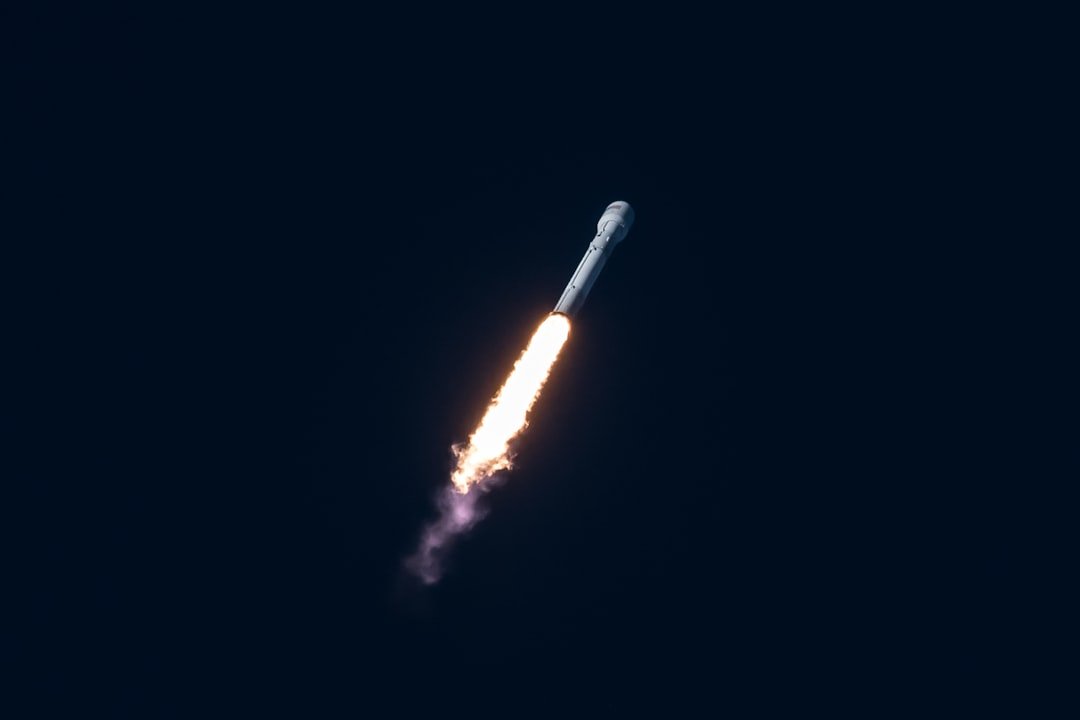
MAHIA, New Zealand (AP) — Rocket Lab successfully launched its Electron rocket Jan. 22, deploying two satellites for new customer Open Cosmos. The launch occurred at 11:52 p.m. NZDT from Launch Complex 1 in Mahia, New Zealand. It marked the 80th flight of the Electron rocket and the company's first mission of 2026.
The mission, named "The Cosmos Will See You Now," placed the satellites into a 1,050-kilometer circular orbit. Deployment occurred about 70 minutes after liftoff using the rocket's kick stage, Rocket Lab said. Open Cosmos, a U.K.-based satellite company with pan-European operations, used the launch to begin its proprietary low-Earth orbit Ka-band telecommunications constellation.
Rocket Lab CEO Peter Beck highlighted the advantages of dedicated missions. "What a great way to start off the year, by welcoming a new customer and launching a mission tailored just for them," Beck said in a company statement. "Today's launch is a great showcase of the benefits of flying dedicated on Electron: accurate constellation deployment, streamlined access to space, and the reliability of consistently delivering mission success for our customers."
The launch demonstrated Electron's capability for high-altitude deployments. SpaceNews reported the orbit as polar, based on the launch site's location. Open Cosmos secured the Ka-band spectrum one week before the launch, according to SpaceNews. That spectrum was previously assigned to Rivada Space Networks, the report added.
This event marked Open Cosmos' first dedicated launch. The company previously deployed imaging and monitoring satellites. The new satellites complement those assets and provide end-to-end services, including design, build and operations, according to company descriptions.
Rocket Lab confirmed mission success shortly after deployment. The kick stage inserted the spacecraft into the planned orbit 1,050 kilometers above Earth, Space.com reported. Liftoff time converted to 10:52 UTC or 5:52 a.m. EST, per official timelines.
The 80th Electron flight built on Rocket Lab's record since 2017. The company has achieved a near-100% success rate in recent years, according to industry analyses. This followed a strong 2025, which included missions for Japanese Earth-observing satellites, Space.com noted.
Open Cosmos was founded around 2018. The firm has scaled production for constellations, focusing on high-resolution imagery, monitoring and now telecommunications. A representative from Open Cosmos called the launch a major milestone. "This launch is a major milestone for Open Cosmos and a critical step in our mission," the representative said, as quoted in SpaceNews.
The mission underscored growing demand for dedicated small satellite launches. Proliferated low-Earth orbit constellations drive this trend, particularly in telecommunications and Earth observation. Electron's versatility suits precise deployments, avoiding rideshare constraints, Rocket Lab said.
Ka-band spectrum allocations fuel new entrants like Open Cosmos. Regulatory bodies reallocated the spectrum after Rivada's prior assignment, SpaceNews reported. This positions Open Cosmos to compete with established players such as Starlink and OneWeb in low-Earth orbit broadband.
Rocket Lab trades on Nasdaq under the ticker RKLB. The company anticipates a busy 2026 manifest, officials said. This launch highlights the shift toward dedicated launches for European space autonomy, amid broader industry trends.
Small launchers like Electron enable non-superpower players. Europe and the U.K. increasingly rely on such providers for constellation deployments. The mission's success adds to Rocket Lab's reliability for high-altitude and precise orbits, rare among small rockets.
Details on satellite size, mass and propulsion remain undisclosed. Full constellation plans, including size and timeline, were not specified in available sources. Post-deployment status, such as commissioning, awaits confirmation. Orbit inclination requires further verification; SpaceNews claimed a polar orbit, consistent with Mahia launches, but other sources did not confirm. Spectrum acquisition details, including exact frequencies and regulatory filings, need cross-checking with bodies like the FCC or Ofcom.
No major contradictions appeared across sources. High-credibility outlets like SpaceNews and Space.com aligned with Rocket Lab's press release. Lower-credibility sites reposted the release verbatim.
This launch sets a precedent for 2026. Rocket Lab's cadence contrasts with competitors like Astra and Relativity, industry observers noted. The event signals commoditization of low-Earth orbit services, expanding access to space for new customers.


