Introduction: Peering into the Emptiness of Space
Space is often imagined as a vast, endless expanse filled with stars, galaxies, and cosmic wonders. Yet, amidst this celestial tapestry lies something equally intriguing: cosmic voids. These are enormous regions of space with significantly fewer galaxies, stars, and other cosmic structures compared to the denser parts of the universe. NASA's upcoming Nancy Grace Roman Space Telescope, set to launch in the late 2020s, promises to revolutionize our understanding of these mysterious empty spaces by observing thousands of newfound cosmic voids. This groundbreaking mission could reshape our comprehension of the universe's structure and evolution, as announced in a recent press release by NASA Breaking News.
In this article, we’ll explore the significance of cosmic voids, the cutting-edge technology behind the Roman Telescope, and how this mission could provide critical insights into the large-scale structure of the cosmos. From the telescope's advanced capabilities to the broader implications for cosmology, this is a journey into the unknown that space enthusiasts won’t want to miss.
What Are Cosmic Voids and Why Do They Matter?
Cosmic voids are often described as the "empty spaces" of the universe, but they are far from insignificant. These regions, which can span hundreds of millions of light-years, contain far less matter than the cosmic average. While galaxies tend to cluster along vast, web-like structures known as filaments, voids represent the gaps between these dense networks. First identified in the 1970s through galaxy surveys, cosmic voids have since become a key area of study for understanding the distribution of matter and the evolution of the universe.
These voids are not just empty; they hold clues about the early universe and the forces that shaped it. For instance, studying voids can help scientists test theories of dark energy, the mysterious force driving the accelerated expansion of the universe. Voids also provide a unique laboratory for examining how gravity and cosmic expansion interact on the largest scales. According to researchers cited in NASA's announcement, the Roman Telescope’s observations could reveal how voids have evolved over billions of years, offering a window into the universe’s past.
The Nancy Grace Roman Space Telescope: A Technological Marvel
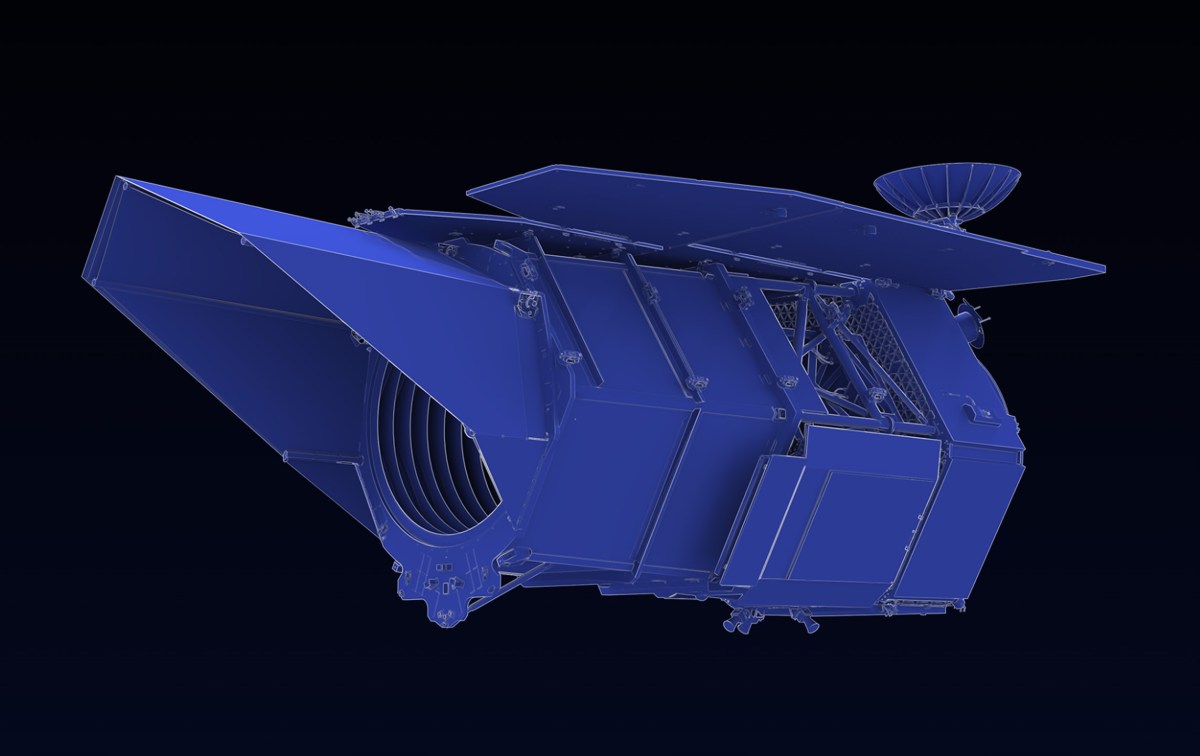
Named in honor of Dr. Nancy Grace Roman, often called the "Mother of Hubble" for her pivotal role in the development of the Hubble Space Telescope, the Roman Telescope is NASA’s next-generation observatory. Scheduled for launch no later than May 2027, this mission is designed to tackle some of the biggest questions in cosmology and astrophysics. With a primary mirror measuring 2.4 meters (7.9 feet) in diameter—comparable to Hubble’s—the Roman Telescope boasts a field of view 100 times larger, allowing it to capture vast swaths of the sky in a single image.
The telescope is equipped with two main instruments: the Wide Field Instrument (WFI) and the Coronagraph Instrument. The WFI, which will be instrumental in studying cosmic voids, features an array of 18 detectors with a total of 300.8 megapixels, enabling high-resolution imaging over a wide area. This capability is crucial for mapping the distribution of galaxies and identifying voids on an unprecedented scale. Additionally, the telescope will operate in the near-infrared spectrum, allowing it to peer through cosmic dust and observe distant objects that are invisible to optical telescopes.
Unlike Hubble, which primarily focuses on detailed observations of specific targets, Roman is designed for large-scale surveys. Its ability to scan vast regions of the sky quickly makes it ideal for studying the large-scale structure of the universe, including the elusive cosmic voids. As NASA notes, the telescope is expected to observe thousands of these voids, providing a dataset that could transform our understanding of cosmic evolution.
How Roman Will Revolutionize Our Study of Cosmic Voids
The Roman Telescope’s mission to study cosmic voids is part of its broader High Latitude Wide Area Survey, which will cover approximately 2,000 square degrees of the sky—about 5% of the total observable sky. By mapping the positions and distances of millions of galaxies, Roman will create a three-dimensional picture of the universe’s structure, highlighting the locations and sizes of cosmic voids with unprecedented precision.
One of the key goals is to measure the growth and evolution of voids over cosmic time. Voids are thought to expand as the universe does, influenced by dark energy and the gravitational pull of surrounding matter. By studying voids at different distances (and thus different points in the universe’s history), Roman will help scientists understand how dark energy has shaped the cosmos. This could provide critical evidence for or against current models of cosmology, including the Lambda-CDM model, which describes the universe as composed of ordinary matter, dark matter, and dark energy.
Moreover, Roman’s observations will allow researchers to study the boundaries of voids, known as void walls, where galaxies and matter are more densely packed. These regions can reveal how matter flows over time, offering insights into the dynamics of cosmic structure formation. As NASA’s press release highlights, the sheer number of voids Roman will observe—thousands more than previous surveys—will provide a statistically robust dataset, reducing uncertainties and enabling more accurate conclusions.
Industry and Scientific Implications
The Roman Telescope’s mission to study cosmic voids is not just a scientific endeavor; it has significant implications for the space industry and international collaboration. The project, managed by NASA’s Goddard Space Flight Center with contributions from the European Space Agency (ESA) and other international partners, underscores the importance of global cooperation in tackling the biggest questions in science. The telescope’s development has also spurred advancements in detector technology, data processing, and space-based instrumentation, which could benefit future missions.
For the scientific community, Roman’s data on cosmic voids will be a treasure trove. It will complement data from other observatories, such as the Euclid Telescope (launched by ESA in 2023) and the Vera C. Rubin Observatory (set to begin operations in 2025), both of which are also studying the large-scale structure of the universe. Together, these missions could create a comprehensive map of cosmic voids and filaments, providing a clearer picture of how the universe evolved from the Big Bang to the present day.
From an industry perspective, the Roman Telescope exemplifies how government-funded space missions drive innovation. The technologies developed for Roman, such as its advanced near-infrared detectors, could find applications in commercial satellite imaging, medical devices, and other fields. Furthermore, the mission’s focus on big data—Roman is expected to generate petabytes of information—highlights the growing importance of artificial intelligence and machine learning in space exploration, opening opportunities for tech companies to collaborate with space agencies.
Future Outlook: What Lies Beyond the Voids?
As we await the launch of the Nancy Grace Roman Space Telescope, the anticipation within the scientific community is palpable. The mission’s ability to observe thousands of cosmic voids could answer long-standing questions about the nature of dark energy, the distribution of dark matter, and the overall structure of the universe. It may even challenge existing theories, prompting a reevaluation of our understanding of cosmology.
Looking further ahead, Roman’s findings could pave the way for future missions designed to probe cosmic voids in even greater detail. Concepts like next-generation gravitational wave observatories or advanced spectroscopic surveys could build on Roman’s data to explore the subtle effects of cosmic expansion within voids. Additionally, as computational models of the universe become more sophisticated, the data from Roman will be invaluable for testing simulations against real-world observations.
For space enthusiasts, the Roman Telescope represents a new era of discovery. It’s a reminder that even the emptiest parts of the universe hold secrets waiting to be uncovered. As we stand on the brink of this exciting mission, one thing is clear: the voids of space are anything but empty—they are windows into the very fabric of the cosmos.
Conclusion: A New Frontier in Cosmic Exploration
NASA’s Nancy Grace Roman Space Telescope is poised to redefine our understanding of cosmic voids, those vast, mysterious regions that punctuate the universe. With its unparalleled wide-field imaging and near-infrared capabilities, Roman will map thousands of these voids, shedding light on the forces that have shaped the cosmos over billions of years. Beyond the science, this mission highlights the power of innovation and collaboration in pushing the boundaries of human knowledge.
As we look to the late 2020s and beyond, the Roman Telescope will not only deepen our understanding of the universe but also inspire the next generation of explorers to gaze into the void—and wonder what lies beyond. Stay tuned to The Number One Reference for Space Exploration for updates on this transformative mission and more groundbreaking news from the final frontier.


