From Shuttle's Shadow to Commercial Cosmos
Imagine a world where space travel isn't just for elite government astronauts, but for entrepreneurs, scientists, and even tourists—propelled by sleek rockets that make the journey as routine as a transatlantic flight. This isn't science fiction; it's the reality unfolding since the Space Shuttle's retirement in 2011. Private players like Axiom Space and SpaceX have stepped up, launching missions to the International Space Station (ISS) with increasing finesse. In this deep dive, we'll trace the engineering leaps and operational triumphs, pitting the bumpy ride of Axiom's debut mission (Ax-1) against the smooth execution of Ax-4 in June 2025. Drawing on mission data, vehicle specs, and evolving regulations, we'll explore how these breakthroughs are filling the post-Shuttle void—while grappling with stubborn health hazards and the geopolitical chess game, including China's ambitious Tiangong station.
Bridging the Gap: After the Shuttle's Last Bow
The Space Shuttle's swan song, STS-135 in July 2011, left a gaping nine-year hole in America's crewed launches to low Earth orbit. NASA turned to Russia's Soyuz for ISS rides, shelling out over $80 million per seat (NASA OIG Report, 2019). It was a humbling dependency that screamed for homegrown solutions. Enter NASA's Commercial Crew Program, which certified SpaceX's Crew Dragon in November 2020. This capsule, lofted by the Falcon 9 rocket, boasts a thrust-to-weight ratio of about 1.2 at liftoff, thanks to Merlin 1D engines churning out 7.6 MN of total thrust—enough to chase the ISS at 7.66 km/s (SpaceX Dragon Specifications, 2020).
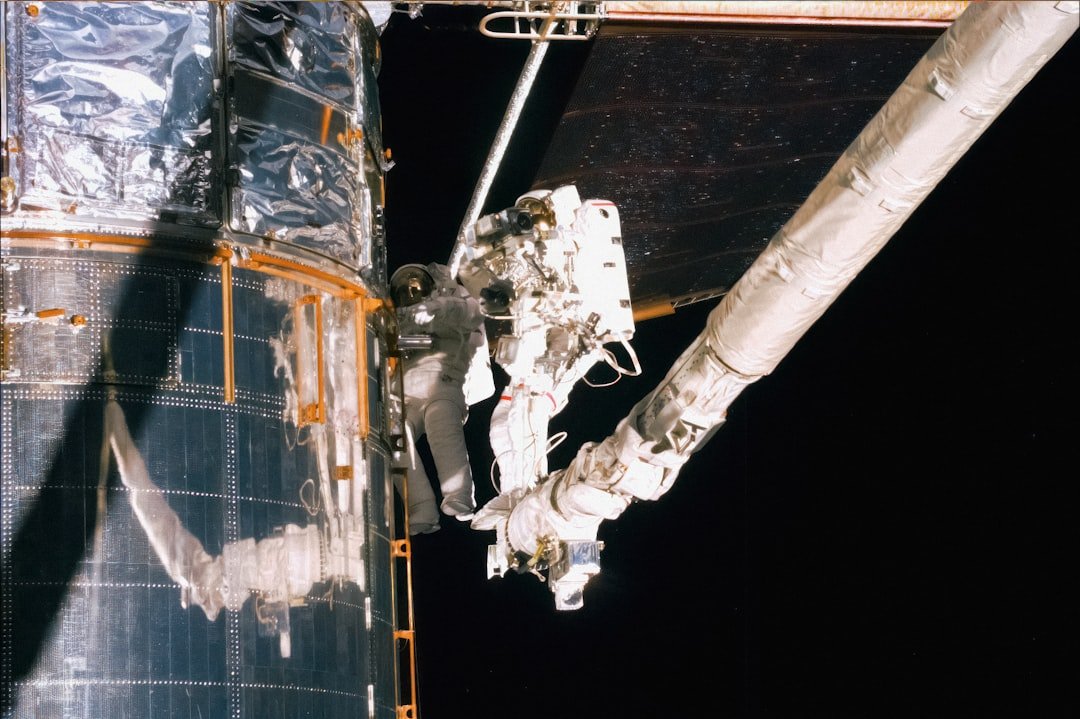
Contrast that with the Shuttle's brute force: 28.6 MN from solid boosters and main engines. Sure, it was reusable, but at what cost? High expenses and tragic risks, like the Challenger and Columbia disasters, plagued it. The new commercial era flips the script with expendable boosters and capsules, slashing turnaround times to under six months. Axiom Space has capitalized on this, pulling off four private flights by 2025—fulfilling a 2011 PBS prediction that the private sector would revolutionize crew transport (PBS NewsHour, 2011). It's not just efficiency; it's a paradigm shift, turning space from a government fortress into an open frontier.
Private Pioneers: From Frenetic Starts to Flawless Orbits
Axiom's missions are a masterclass in evolution. Take Ax-1 in April 2022: the first all-private crew to the ISS, blasting off from Kennedy Space Center aboard a Falcon 9 Block 5 and Crew Dragon Endeavour. After a tense 21-hour sprint, they docked seamlessly. But what was meant as an 8-day stint ballooned to 17 due to splashdown weather woes. The four-person team—led by commander Michael López-Alegría and three paying adventurers—tackled over 25 microgravity experiments. Yet, as López-Alegría admitted, "Our timeline was very aggressive, especially early in the mission... The pace was frenetic in the beginning" (SpaceNews, 2022). At the ISS's 408-422 km altitude, precise 0.1 km/s delta-v tweaks for rendezvous exposed the growing pains of blending private crews into rigid station protocols.
Fast-forward to Ax-4's predawn launch at 2:31 a.m. EDT on June 25, 2025. This time, everything clicked: flawless docking, a crisp 14-day agenda packed with science and tech demos. NASA's take? "As part of NASA’s efforts to expand access to space, four private astronauts are in orbit following the successful launch of the fourth all private astronaut mission" (NASA.gov, 2025). Upgrades shone through, like Dragon's beefed-up life support, sustaining up to seven crew for 210 days with Draco thrusters hitting a 300-second specific impulse for nimble station-keeping.
Stack that against NASA's Crew-1 in 2020, a 167-day marathon on a similar Dragon. Axiom's briefer jaunts are proving grounds for everyday spacefarers, minimizing zero-g woes like muscle atrophy. For a reality check, consider pros like NASA's Jonny Kim, who wrapped an 8-month stint in late 2025 during Expedition 72/73. From the ISS's Cupola module, he peered at Earth and probed fluid dynamics in its 51.6-degree inclination orbit. With 13 pressurized modules offering 916 cubic meters of livable space (NASA ISS Fact Sheet, 2024), the station juggles up to 11 souls—government vets and private upstarts alike—highlighting a harmonious, if crowded, coexistence.
Rules of the Game: Evolving Regulations for New Astronauts
Space isn't the Wild West anymore. In July 2024, the FAA tightened its commercial astronaut wings criteria: flights must top 50 miles (80 km) on licensed vehicles, with beefed-up training in emergencies and systems. It's a nod to the Kármán line, though suborbital hops like Blue Origin's New Shepard peak at 100 km with 1 km/s velocity—far shy of orbital 7.8 km/s. Waivers for experts keep the door ajar, democratizing the stars.
This framework lets non-NASA folks earn their stripes via SpaceX's licensed launches, a far cry from the old days of years-long government training. Safety's the big win: zero U.S. commercial crew fatalities since 2020, versus the Shuttle's 1.5% per-mission risk (NASA ASAP Report, 2010). It's opening space to all, one certified flight at a time.
Global Rivals: China's Tiangong Takes Center Stage
While the U.S. bets on commerce, China's Tiangong station embodies state-orchestrated ambition. Pieced together via 11 launches from 2021 to 2023—including the Tianhe core on a Long March 5B in April 2021—it orbits at 390-450 km with a 41.5-degree inclination. Shenzhou crew ships, weighing 7,800 kg dry with 290-second ISP for maneuvers, ferry trios of taikonauts, backed by Tianzhou cargo haulers lugging up to 6,500 kg (CNSA Specifications, 2021).
China's extending olive branches: a February 2024 pact with Pakistan's SUPARCO to train astronauts, the first such deal. "The agreement marks the first time that China will select and train international astronauts" (SpaceNews, 2024). A Pakistani might soon fly, bypassing ISS bans rooted in U.S. laws. Tiangong's three modules yield 110 cubic meters, a modular counterpoint to the ISS's looming 2031 deorbit. With over 90% water recycling (CMSEO Report, 2023), it's a scalable rival—state-fueled versus U.S. commerce—spurring tech swaps and potentially splintering global space alliances.
Perils in the Void: Health Hurdles and Close Calls
Progress doesn't erase peril. January 2026 brought a stark reminder: a medical crisis forced the ISS's first emergency crew return, yanking four astronauts home a month early. "A medical issue prompted the first-ever emergency return from the International Space Station" (BBC News, 2026). Details are scarce, but it spotlights threats like 0.5-1 mSv/day radiation and 1-2% monthly bone loss, countered by gear like resistive exercisers with 270 kg loads (NASA Human Research Program, 2024).
Ax-1's chaotic pacing gave way to smarter workload balancing in later flights. But this evacuation exposed long-haul gaps. Dragon's edge? A 0.3 km/s deorbit burn for hours-quick splashdowns, powered by SuperDraco's 3,064 kN thrust abort system. In space, resilience is everything.
The Bigger Picture: Industry Boom and Tech Horizons
This surge is birthing a thriving low Earth orbit economy. NASA buys private seats, offsetting the ISS's $3-4 billion yearly tab (NASA Budget, 2025). Axiom's 2028 station aims higher: 340 cubic meters, 100 kW solar power. Reusability reigns—Falcon 9's first stage recovers at >95% success, dropping costs to $2,700/kg to LEO versus the Shuttle's $27,000/kg (SpaceX, 2024).
Geopolitically, Tiangong's partnerships amid U.S.-China friction could polarize space. Yet rivalry fuels breakthroughs: Dragon's LIDAR docking versus Shenzhou's radar, advanced health monitoring for Mars' 6-9 month hauls. Ax-4's success? Proof that commercial crew is reliable, inviting diverse explorers to build sustainable outposts.
A New Dawn in Orbit
The Shuttle's era faded into history, but private missions like Axiom's have ignited a vibrant sequel—complemented by NASA's pros and China's bold expansions. Challenges persist, from medical scares to regulatory tweaks, yet data-fueled refinements in timelines, specs, and frameworks promise a more inclusive space age. As the ISS bows out, these strides secure humanity's orbital foothold, sparking innovations that could redefine our place among the stars.


