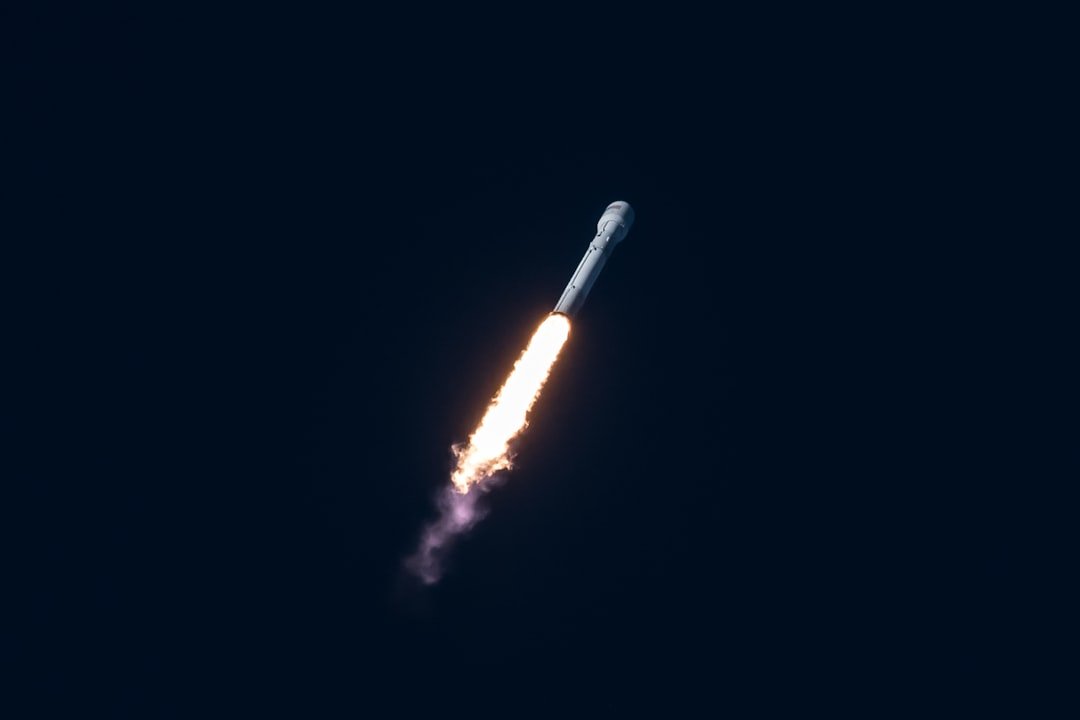
Mission Success: Rocket Lab Launches Korean Earth-Imaging Satellite, Completes 2nd Launch in 8 Days
MAHIA PENINSULA, New Zealand (AP) — Rocket Lab launched its Electron rocket on January 30, 2026, deploying the NEONSAT-1A Earth-imaging satellite for South Korea's Korea Advanced Institute of Science and Technology. The launch occurred at 2:21 p.m. local time from Launch Complex 1 on New Zealand's Mahia Peninsula. Officials at Rocket Lab described the mission as the company's 81st successful Electron flight.
The mission, named "Bridging The Swarm," placed the satellite into a 540-kilometer low Earth orbit. Rocket Lab officials said the launch marked the company's second in eight days and its second of 2026. KAIST developed NEONSAT-1A as part of a program to test technology for a future constellation focused on monitoring natural disasters and national security along the Korean Peninsula.
Rocket Lab completed the deployment without reported issues. The Electron rocket, a small-lift vehicle, carried the dedicated payload. KAIST officials previously launched NEONSAT-1 with Rocket Lab in 2024 under the mission "Beginning of The Swarm." That earlier satellite served as the initial test for the constellation.
Sir Peter Beck, Rocket Lab founder and CEO, attributed the rapid cadence to strong demand for the Electron rocket. "Two launches in eight days is a strong start to the year that speaks volumes about the demand for Electron and the excellence and dedication of the Rocket Lab team," Beck said in a company statement. He added that the company achieved a record 21 launches in 2025 with a 100% success rate.
The NEONSAT program involves collaboration between KAIST and the South Korean government. Officials said the satellites will provide imaging capabilities for disaster response and security monitoring. Rocket Lab's involvement extends its partnership with KAIST, building on the 2024 launch.
Rocket Lab operates Launch Complex 1 in New Zealand for Electron missions. The company, listed on Nasdaq as RKLB, focuses on dedicated launches for small satellites. Officials noted that the 2026 schedule includes missions for commercial Earth observation, international agencies, national security, and hypersonic testing.
The first launch of 2026 occurred approximately eight days prior, though specific details on that mission remain undisclosed in company statements. Rocket Lab's 2025 performance included 21 flights, all successful, according to the company. This pace exceeded previous years, with Electron's debut in 2017 leading to 80 prior missions by the end of 2025.
KAIST, South Korea's leading science and technology university, owns and operates the NEONSAT-1A satellite. The payload tests advanced Earth-observation technology, though exact specifications such as mass and sensor resolution were not detailed in available reports. Rocket Lab confirmed the satellite reached its intended orbit.
The Electron rocket features reusable Rutherford engines and a carbon composite structure. No new technology demonstrations occurred in this mission, according to Rocket Lab. The company did not report attempts at fairing recovery, unlike some 2025 flights.
South Korea's investment in Earth-observation satellites aligns with regional needs. Officials have cited threats from North Korea and natural disasters like typhoons as drivers for the NEONSAT constellation. KAIST plans additional satellites to expand the swarm.
Rocket Lab's high launch rate positions it in the growing small-lift market. Competitors include providers of rideshare services, but Rocket Lab emphasizes responsive, dedicated options. The company reported no anomalies during the January 30 liftoff.
Independent verification of the launch success came from Rocket Lab's telemetry data. No third-party confirmations, such as orbital tracking from Celestrak, appeared in initial reports. KAIST has not issued a separate statement on satellite signal acquisition.
The mission underscores trends in Asia's space sector. South Korea's Korea Aerospace Research Institute supports related programs, though not directly involved here. Rocket Lab's cadence signals potential revenue growth for the company.
Historical data shows Electron's success rate improved over time. From 2017 to 2024, the rocket completed missions with occasional failures, but 2025 marked a turning point with full reliability, according to Rocket Lab records.
Investors monitor Rocket Lab's performance amid development of its larger Neutron rocket. The company values at over $1 billion in ongoing projects. No stock price changes were attributed directly to this launch in immediate reports.
The NEONSAT-1A deployment adds to global Earth-observation capabilities. Similar constellations operate worldwide, including those from companies like Planet Labs. Rocket Lab's role supports international partnerships in space technology.
Officials expect more launches in 2026, though exact manifests remain unannounced. The company aims to maintain its leadership in small satellite deployment.


