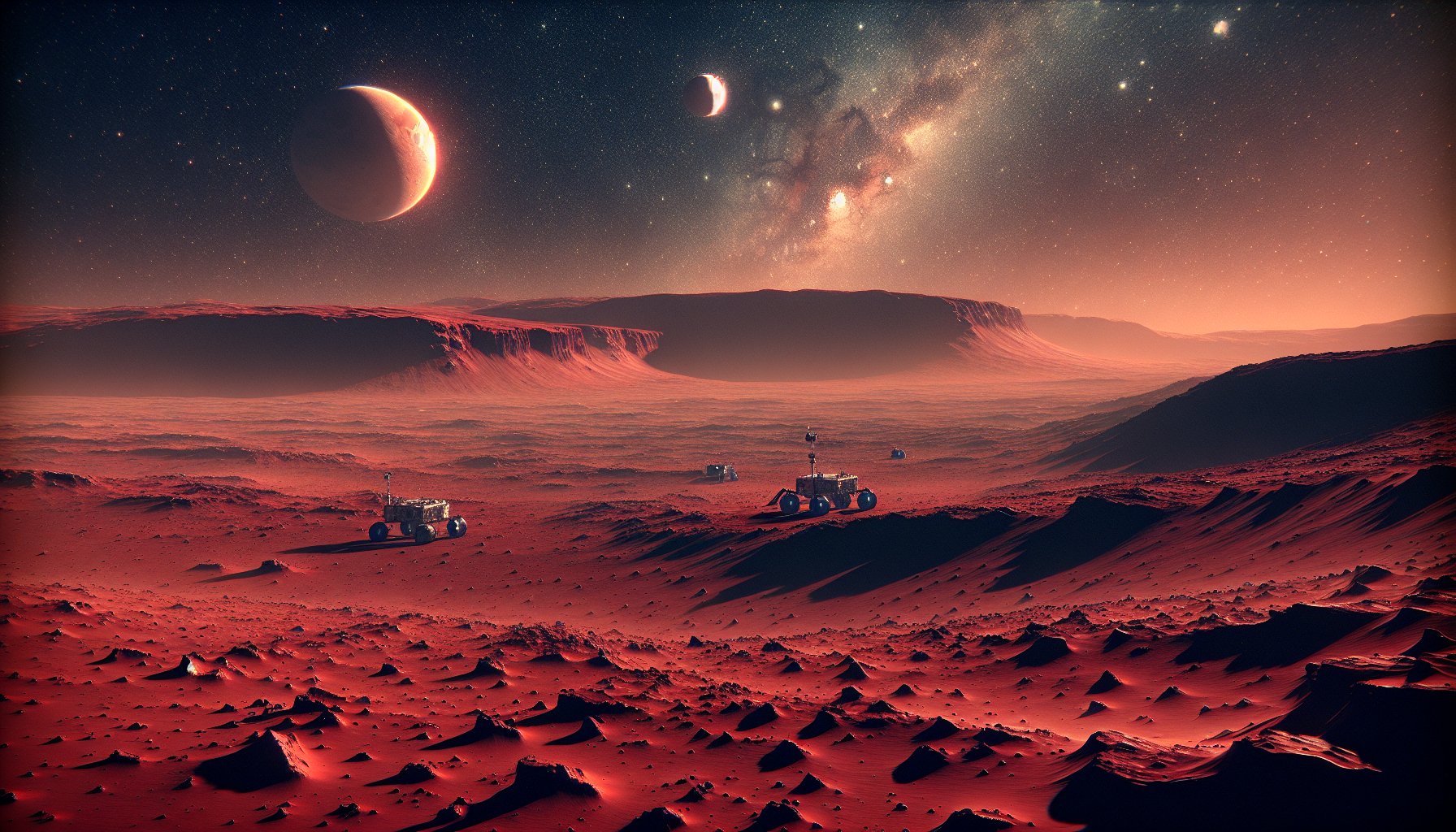
Imagine a lone explorer trekking across an alien desert, blindfolded and bound by a single daily lifeline to home. For five years, that's been the reality for NASA's Perseverance rover on Mars. But no more. On February 18, 2026, engineers unveiled a breakthrough: an onboard navigation system that lets the rover pinpoint its location without pinging Earth. Dubbed Mars Global Localization, this tech could redefine how we roam the Red Planet, turning cautious crawls into bold strides.
From Guesswork to Precision
Perseverance touched down in Jezero Crater back in February 2021, armed with visual odometry—a method that tracked surface features and wheel slippage to estimate position. It worked, but errors piled up fast, swelling beyond 35 meters on extended drives. Picture the rover halting prematurely, paralyzed by the risk of tumbling into a hidden ravine or crunching against jagged rocks. Those inaccuracies demanded constant oversight from mission control, stifling the rover's independence.
Enter Mars Global Localization. Activated for the first time on February 2, 2026, the system snaps panoramic images from the rover's navigation cameras and cross-references them against pre-loaded orbital maps. In roughly two minutes, it nails the rover's position to within 25 centimeters. That's not just an upgrade; it's a quantum leap in autonomy, crafted by engineers at NASA's Jet Propulsion Laboratory (JPL) in Pasadena, California.
The brains behind it? An algorithm running on a repurposed processor originally dedicated to chatting with the Ingenuity Mars Helicopter, which wrapped its flights in 2024. This clever recycling expands Perseverance's computational muscle without adding hardware weight—crucial on a world where every ounce counts.
Autonomy in Action
Vandi Verma, JPL's chief engineer for robotics operations, paints a vivid picture of the old days: "Imagine you're alone in a vast desert, with no roads and no maps, and you only get one phone call a day to ask, 'Where am I?'" she said in a NASA video. For Perseverance, that phone call meant waiting up to 20 minutes each way for Earth-bound corrections, a lag that turned every drive into a high-stakes gamble.
Now, integrated with the rover's AutoNav feature—which scouts hazards and plots paths—the new system lets Perseverance venture farther without daily hand-holding. In its debut test, the rover stitched together a panorama from five stereo image pairs and locked in its coordinates with pinpoint accuracy. No more second-guessing; just efficient exploration across Mars' rugged badlands.
This isn't entirely new territory for NASA. Predecessors like the Curiosity rover leaned on dead reckoning and sporadic orbital tweaks, but they too were shackled by communication delays. Perseverance's upgrade slashes that dependency, especially vital amid ongoing challenges like wheel wear and dust buildup as it caches samples for a potential Earth return.
Paving the Way for Future Explorers
The tech taps into onboard databases of orbital imagery, transforming raw data into a reliable Martian atlas. Experts from sources like Space.com and Universe Today agree: it's a robust step toward self-sufficiency, with potential to boost daily drive distances by 20 to 50 percent. Engineers are already tweaking the algorithm for diverse terrains, ensuring it thrives in everything from dusty dunes to boulder-strewn craters.
Verma sums up the shift succinctly: "For pinpoint accuracy, it needed humans back on Earth. But not anymore." This edge-processing prowess counters deep-space delays, influencing not just NASA but commercial ventures like SpaceX's Mars ambitions.
Looking ahead, Mars Global Localization echoes in upcoming missions—the VIPER rover hunting lunar ice, or Dragonfly buzzing Titan's skies. It's a harbinger of an era where robots, and eventually humans, navigate distant worlds with less earthly oversight, lightening the load on ground teams and unlocking bolder discoveries.
After five years of grinding through Jezero's ancient lakebed, Perseverance isn't slowing down—it's gearing up. This upgrade doesn't just extend its mission; it propels us closer to a future where Mars feels a little less like an unreachable frontier and more like the next neighborhood to explore.


