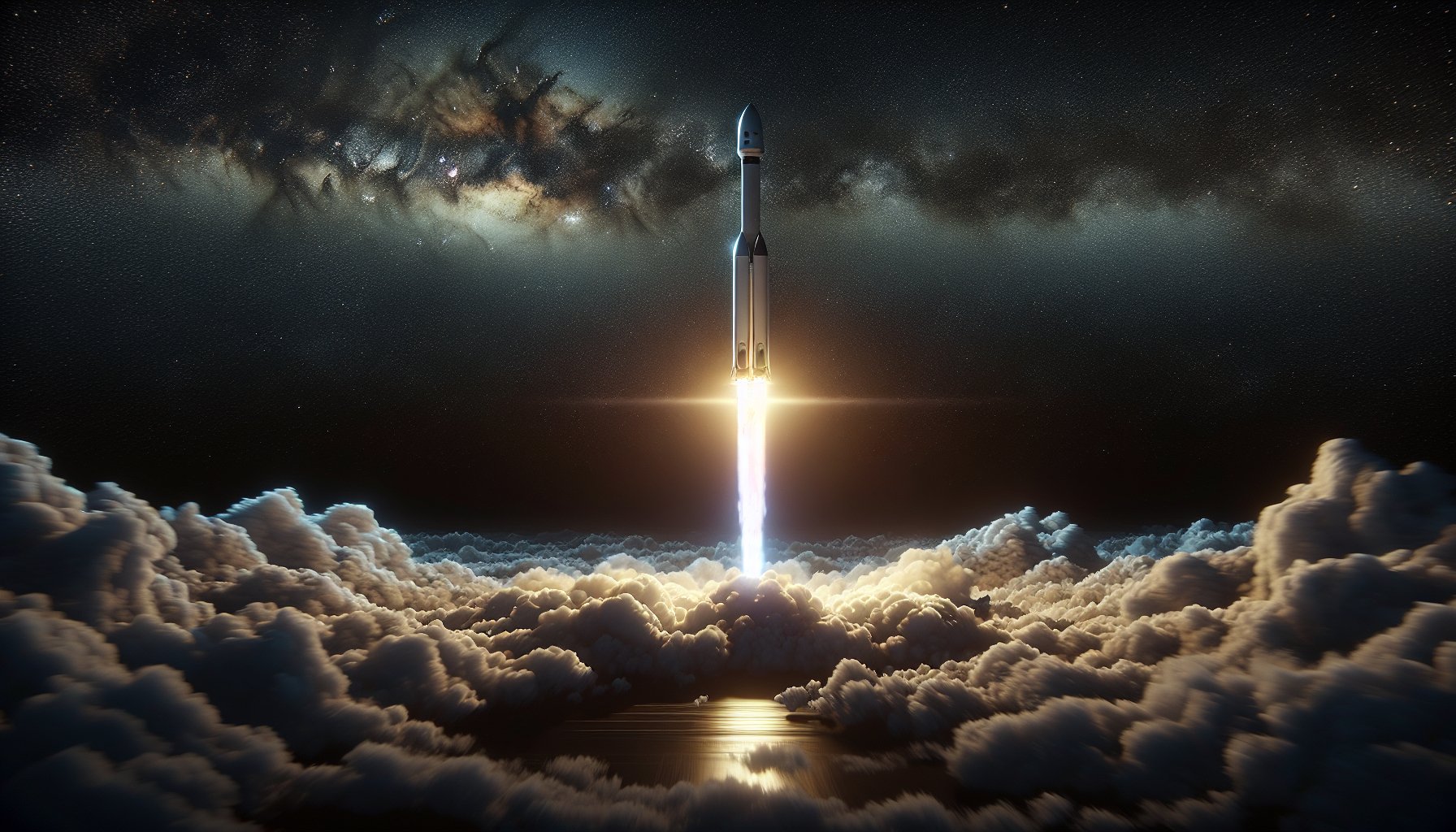
As the sun dipped below the horizon, painting the Florida sky in hues of orange and indigo, a Falcon 9 rocket pierced the twilight. This wasn't just another launch—it was a meticulously orchestrated ballet of engineering, pushing the boundaries of reusable spaceflight and inching us closer to a truly connected planet.
A Flawless Ascent from the Space Coast
At precisely 6:04 p.m. EST on Tuesday, SpaceX ignited its Falcon 9 from Space Launch Complex 40 at Cape Canaveral Space Force Station. The rocket, trailing a brilliant plume against the fading light, arced southeastward on its mission: Starlink 6-110. This marked the company's 18th launch of 2026, a testament to its relentless pace.
Weather played a starring role, with the 45th Weather Squadron forecasting a better-than-95% chance of success. "High pressure will continue to build across the peninsula overnight and into tomorrow, bringing ideal conditions for the launch window," they noted. No surprises there—the Space Coast's reliable skies have become a launchpad staple under such systems.
Just over an hour later, at 7:10 p.m. EST, SpaceX confirmed the deployment of all 29 V2 Mini satellites into low Earth orbit. These newcomers would soon maneuver to their operational altitudes, ready to beam high-speed internet to underserved corners of the globe.
Reusability in Action: Booster B1092's Milestone Flight
What sets SpaceX apart? Reusability, embodied here by the first-stage booster B1092. This veteran rocketed skyward for its 10th time, a feat that underscores the Falcon 9's design genius. After separating, it executed a pinpoint landing on the droneship Just Read the Instructions—eight minutes post-liftoff. That splashdown? The 151st for the vessel and SpaceX's 576th overall booster recovery.
B1092's resume reads like a who's who of space missions: NASA's CRS-32 cargo run to the International Space Station, the National Reconnaissance Office's NROL-69, and the U.S. Space Force's USSF-36. While some boosters have logged up to 19 flights, this one's decade of service highlights how reuse slashes costs, giving SpaceX an edge over rivals.
Notably, this launch skipped fairing recovery, though SpaceX often recycles those protective shells to trim expenses further. NASA and Department of Defense officials, familiar with B1092 from past gigs, offered no immediate comments.
Expanding the Constellation: Toward Global Connectivity
Before this mission, astronomer Jonathan McDowell of the Harvard-Smithsonian Center for Astrophysics tallied over 9,700 Starlink satellites in orbit. Adding these 29 pushes the count tantalizingly close to 10,000. Operated by Starlink Services LLC, a SpaceX subsidiary, the network already blankets more than 100 countries with low-latency broadband, per the European Space Agency's eoPortal directory.
This deployment bucks recent trends slightly—previous launches from the same pad carried 24 to 28 satellites, but SpaceX upped the ante to 29 here. It's all part of a rapid buildup since the first Starlink birds took flight in May 2019. By October 2024, the constellation had swelled past 7,000, with a focus on polar and high-latitude coverage.
SpaceX's high cadence shines through: three launches in under two days isn't uncommon lately, and this flawless outing adds to the streak. No anomalies marred the ascent or separation, per company reports.
Pricing Shifts and Future Horizons
Amid this growth, SpaceX tweaked its Falcon 9 pricing. The company's website now lists a standard plan through 2026 for payloads up to 5.5 metric tons to low Earth orbit, reflecting surging demand for satellite rideshares. Full details remain under wraps, but it's a nod to the evolving economics of space.
This was the 295th orbital mission from SLC-40, a bustling hub with more Starlink flights queued up in the weeks ahead. Yet, challenges loom—space policy experts warn of orbital debris risks from mega-constellations like this. SpaceX eyes solutions: transitioning to advanced V3 satellites and leveraging the mighty Starship for even greater scalability.
A Step Closer to the Stars
In the end, this twilight mission isn't just about adding dots to the night sky. It's a vivid reminder of how SpaceX is rewriting the rules of access—to space, to information, to each other. As the constellation nears 10,000 strong, the dream of seamless global internet edges from science fiction to everyday reality, one reusable rocket at a time. With no immediate follow-ups from SLC-40, the Space Coast catches its breath—but not for long. The stars await.


