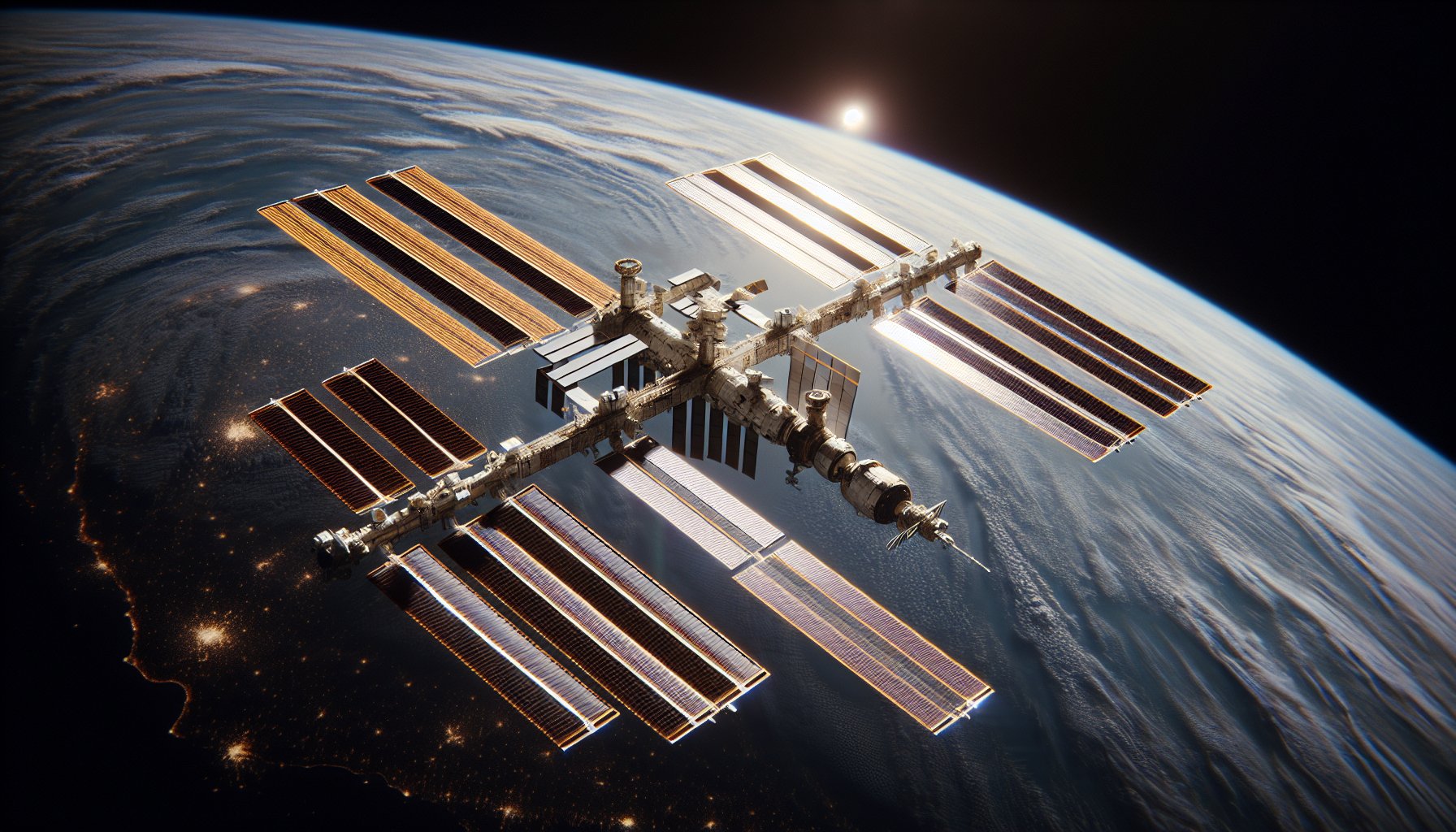
NASA Astronaut Identifies Himself as Victim of Medical Incident That Ended ISS Mission Early
WASHINGTON (AP) — NASA astronaut Mike Fincke revealed Feb. 25, 2026, that he suffered a medical incident aboard the International Space Station on Jan. 7, 2026, prompting the first medical evacuation in the station's 25-year history.
Fincke, 58, a veteran astronaut, issued a statement thanking his crew and NASA flight surgeons for their quick response, which stabilized his condition. The incident led to the early termination of the Crew-11 mission and the cancellation of a planned spacewalk on Jan. 8, 2026.
NASA officials said they considered an early return for the crew on Jan. 8, 2026, after determining Fincke's status remained stable. The agency cited medical privacy as the reason for initially withholding his identity.
The Crew-11 mission, launched via SpaceX's Crew Dragon spacecraft, included Fincke as commander, NASA astronaut Zena Cardman, Japanese astronaut Kimiya Yui from JAXA, and Russian cosmonaut Oleg Platonov from Roscosmos. All four returned to Earth early due to the incident.
Fincke's statement marked a shift from NASA's initial privacy stance, coming about seven weeks after the event. He voluntarily identified himself, according to NASA.
"I experienced a medical event on Jan. 7 that required immediate attention from my space station crew members," Fincke said in the NASA-released statement. "Thanks to their quick response and the guidance of our NASA flight surgeons, my status quickly stabilized."
The incident represented a historic first for the ISS, which has operated since 1998 and hosted more than 250 crew members since 2000 without prior medical evacuations, according to NASA records.
Minor health issues on the station have typically been managed on-site or through delayed returns, officials said. This event underscored the limits of current space medicine protocols.
Crew members responded to Fincke's condition under guidance from NASA flight surgeons on the ground. The ISS features telemedicine capabilities, ultrasound equipment and an onboard pharmacy for such responses, according to agency descriptions.
NASA did not disclose the exact nature of Fincke's medical incident, citing privacy concerns. Sources including NBC News reported no specifics on whether it involved injury, cardiac issues or infection.
The early return disrupted the Crew-11 mission's objectives, though NASA has not detailed the extent of lost science experiments or operational impacts.
Fincke, with prior ISS experience, served as pilot and commander for Crew-11. He has flown multiple missions, including time on the space station, according to his NASA biography.
The incident occurred amid ongoing international partnerships on the ISS, involving NASA, JAXA and Roscosmos, despite U.S.-Russia tensions.
SpaceX provided the Crew Dragon vehicle for transport, as part of commercial crew rotations that began in 2020.
Officials described the evacuation as a milestone, highlighting health risks in microgravity such as fluid shifts, bone loss, radiation exposure and cardiac strain.
This event aligns with broader trends in spaceflight, including preparations for long-duration missions like NASA's Artemis program for lunar returns and potential Mars expeditions.
NASA has emphasized the need for robust in-space healthcare as private spaceflight grows, with companies like Axiom Space planning missions.
Past ISS incidents, such as European astronaut Alexander Gerst's eye issue in 2018 or Italian astronaut Luca Parmitano's helmet leak in 2013, were resolved without mission termination, according to agency reports.
The Crew-11 evacuation signals potential shifts in protocols prioritizing crew safety over mission completion, officials said.
Fincke's revelation followed NASA's announcement on Jan. 8, 2026, of the spacewalk cancellation and early-return considerations.
The agency has not provided the precise return date for the crew or updates on Fincke's current health status.
Sources including mynews13.com reported that Fincke's disclosure ended weeks of speculation about the incident.
"The rare decision to cut a mission short and bring Fincke and three other crew members home early made for a dramatic week in space early this year," NBC News stated in its coverage.
NASA plans to monitor implications for future missions, including advancements in autonomous care technology for deep-space travel.
The ISS, launched in 1998, approaches 28 years of operation by 2026, with the 25-year figure often cited in rounded references to its crewed history, according to sources.
This incident reinforces the human factors in space exploration, amid recent delays in programs like Artemis and the Space Launch System, as noted in industry analyses.


