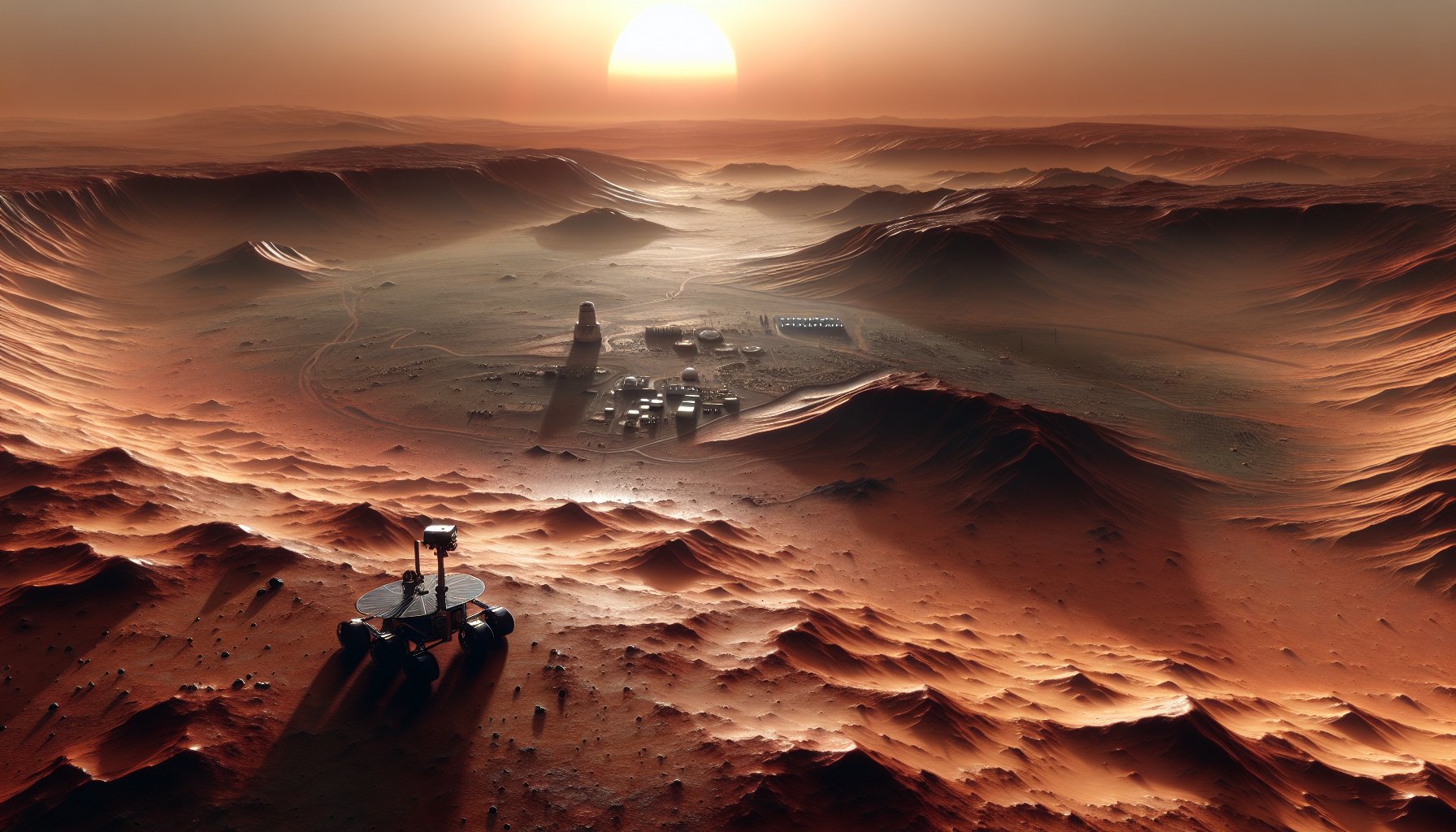
NASA's Perseverance Rover Records Martian Wind Sounds Using SuperCam Instrument
PASADENA, Calif. (AP) — NASA's Perseverance rover captured audio of wind on Mars using its SuperCam instrument on Feb. 22, 2021, officials said. The recording occurred on the rover's fourth Martian day, or sol, in Jezero Crater. SuperCam, mounted on the rover's mast, picked up the sounds after deployment, according to NASA and the Jet Propulsion Laboratory.
The audio provides insights into Mars' atmosphere and weather, NASA scientists said. SuperCam's microphone recorded the wind around the 20-second mark in the clip. Engineers digitally removed rover background noises for clarity, per NASA records. This marked one of the first instances of audible Martian wind, building on an initial quiet recording from Sol 1 on Feb. 19, 2021.
Perseverance carries two microphones: one on SuperCam and another on its chassis, NASA reported. By October 2021, they had collected nearly five hours of audio, including wind gusts, wheel movements over gravel, motor operations and laser strikes on rocks. The SuperCam mic, developed through international collaboration, integrates with tools for spectroscopy and imaging.
A 2022 study, published April 1 in the Journal of Geophysical Research: Planets, analyzed sounds from the first 216 sols, according to NASA. Researchers found sound travels about 15 meters per second slower on Mars than on Earth due to the thin carbon dioxide atmosphere. Low-frequency sounds dominate, creating a "deeply silent" environment, the study concluded.
"This recording was made on Feb. 22, 2021, on the fourth sol... Some wind can be heard, especially around 20 seconds into the recording. Rover background sounds have been removed," NASA stated in a release from its Jet Propulsion Laboratory, Los Alamos National Laboratory and French partners including CNES and ISAE-Supaero.
SuperCam also captured the first inter-spacecraft audio on April 30, 2021, during the Ingenuity helicopter's fourth flight, JPL said. The microphone recorded rotor whir and wind from about 262 feet away. This event represented a milestone, as one spacecraft documented sounds from another on a different planet, according to mission engineers.
Audio files from the Sol 4 wind recording became public on March 10, 2021, NASA announced. They are available in WAV, MP3 and MP4 formats on the agency's website. The files total about 11.44 MB for WAV, 1.23 MB for MP3 and 18.96 MB for MP4.
Perseverance's microphones add a new layer to exploration, JPL officials noted. They enable studies of aeroacoustics, dust devils and operational monitoring. A separate recording captured what researchers described as dust devil sounds, according to CBS News reports, though NASA has not verified this in primary sources.
The rover landed in Jezero Crater on Feb. 18, 2021, as part of the $2.7 billion Mars 2020 mission, NASA said. It focuses on astrobiology, sample collection for future return to Earth and testing technologies for human missions. Previous rovers like Curiosity lacked microphones, as scientists once viewed audio as low priority.
SuperCam results from an international team led by Los Alamos National Laboratory, with contributions from France's CNES and CNRS, NASA detailed. The instrument uses commercial-grade microphones similar to DPA models. It combines laser-induced breakdown spectroscopy, Raman and infrared spectroscopy, and a remote micro-imager.
Ingenuity's audio highlighted sound propagation challenges in Mars' thin air, which is about 1% as dense as Earth's, per the 2022 study. Winds and atmospheric conditions affect high-frequency sounds more severely, researchers found.
Mission scientists emphasized the value for future human exploration. Acoustic data could inform communication systems and environmental models for programs like NASA's Artemis or SpaceX's Starship, though officials did not speculate on timelines.
Perseverance has targeted rocks named "Yeehgo" and "Maaz" for analysis, combining audio with visual and chemical data, according to Arizona State University and Malin Space Science Systems. Laser zaps on these rocks produced distinct sounds in recordings.
The Sol 1 audio, taken about 18 hours after landing, sounded quieter and more subdued than the Sol 4 wind clip, NPR reported, citing SuperCam team members. This contrast underscores varying atmospheric conditions early in the mission.
Broader audio collection includes operational noises that aid engineers in diagnosing rover health, JPL said. For instance, wheel crunching over gravel provides data on terrain.
"A new study... reveals how sound differs on Mars, including traveling slower than on Earth... a deep silence prevails," NASA summarized in a statement on the acoustics research.
This development follows the Huygens probe's 2005 audio from Titan, marking progress in planetary sound recording, historians noted. Perseverance's efforts align with a trend toward multisensory space exploration.
NASA continues to analyze the data for insights into Martian weather patterns, including wind speeds and dust activity. No major contradictions appear in records from NASA, JPL and partner agencies.


