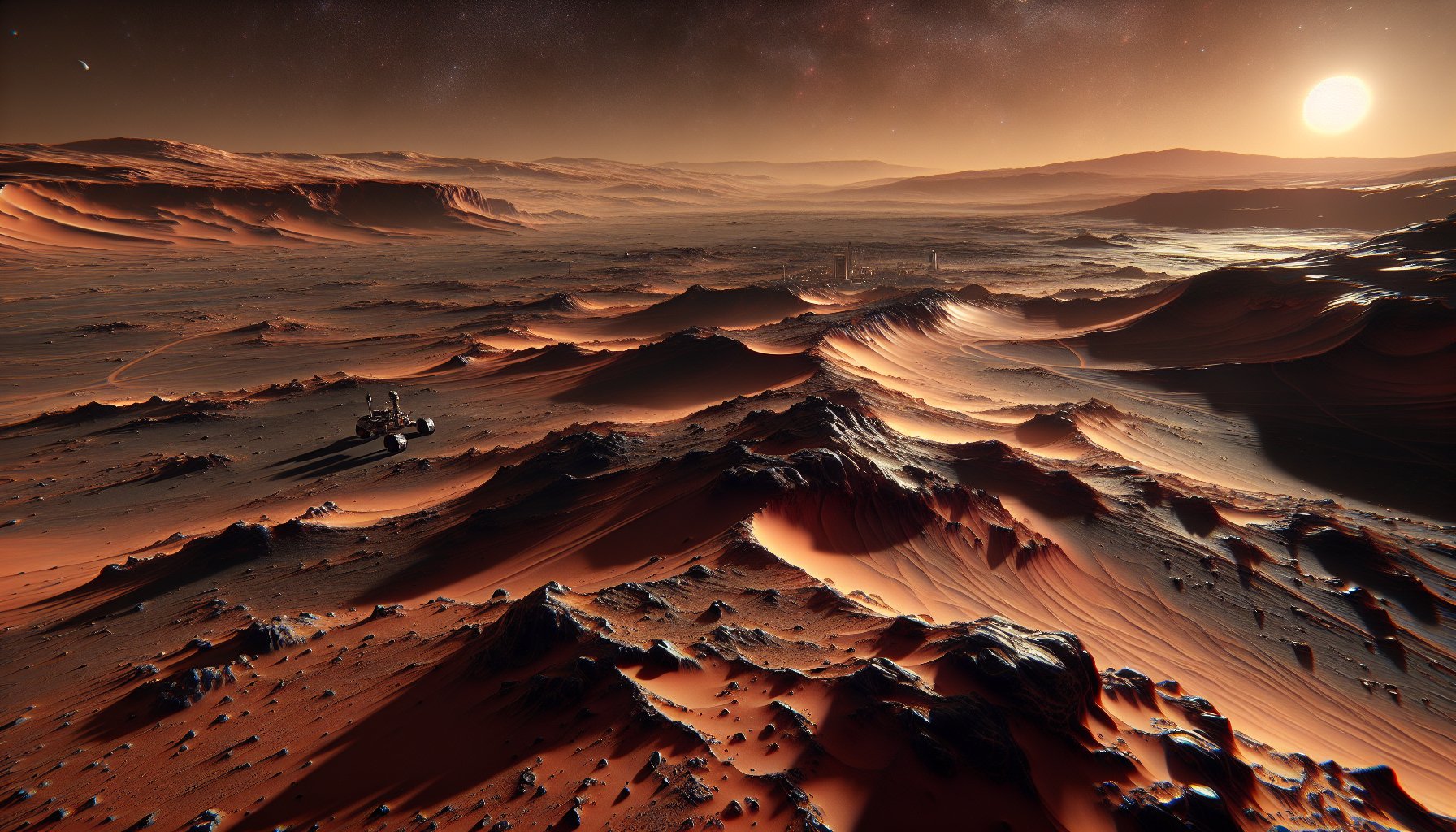
NASA Uses Mars Global Localization as GNSS Replacement for Perseverance Rover
PASADENA, Calif. (AP) — NASA's Jet Propulsion Laboratory has deployed a new navigation system called Mars Global Localization on the Perseverance rover to replace satellite-based GNSS on Mars. Engineers implemented it recently after retiring the Ingenuity helicopter in 2024. The rover operates in Jezero Crater on the Martian surface.
The system allows autonomous positioning without Earth signals by matching images from the rover's navigation cameras to onboard orbital maps. This reduces reliance on communication delays of four to 24 minutes one way. NASA developed it to support future missions with real-time hazard avoidance, according to Hackaday and GPS World reports.
JPL repurposed the Helicopter Base Station processor, which originally handled Ingenuity communications, for the task. Engineers retired the helicopter after propeller damage from a rough landing. The off-the-shelf hardware processes data faster than the rover's custom radiation-hardened computers, Hackaday reported.
Testing revealed radiation damage to about 25 bits in the processor's 1 gigabyte of RAM. Engineers isolated the faulty bits and validated performance by comparing it to the rover's main computer. The algorithm ran consistently after adjustments, according to Hackaday.
This technology builds on terrain-relative navigation used during Perseverance's February 2021 landing, which helped avoid hazards during descent. "To land accurately and avoid hazardous terrain, NASA has developed an autonomous, vision-based system for landmark recognition, spacecraft position estimation, and spacecraft retargeting, which will be used on Mars 2020," NASA stated in a description of the foundational technology.
Mars lacks a GNSS constellation like Earth's GPS, so rovers traditionally rely on visual odometry or Earth-based commands. The new system uses panoramic images and digital elevation models from orbital data, similar to terrain-based navigation in cruise missiles, sources said.
JPL's approach extends 2021 landing concepts to surface operations, enabling independent rover navigation. It supports continuous movement and scalability for rover swarms, according to GPS World.
Radiation testing on the repurposed hardware provides data for future missions. The processor, not designed for radiation, withstood Mars' environment with minimal fixes after isolating damaged bits, Hackaday detailed.
Analogous systems appear in lunar navigation research. The European Space Agency explored digital elevation model constraints for positioning in 2022, using extended Kalman filters for accuracy in GNSS-denied environments, a technical paper noted.
Perseverance's JPL mission team leads the effort. The rover landed in Jezero Crater to search for signs of ancient life and has traveled more than 25 kilometers since arrival, NASA mission logs show.
Ingenuity completed 72 flights before retirement, leaving its base station idle until repurposing. This reuse demonstrates efficient resource management in space missions, sources said.
Broader trends include visual and inertial fusion for planetary navigation. Analog simulations, like AMADEE-24 in August 2025, test similar concepts for extravehicular activities to reduce Earth-link dependence, related reports said.
JPL experts in satellite geodesy contribute, with one researcher specializing in precise positioning by applying Earth-based techniques to Mars, a JPL profile stated.
No exact accuracy metrics appear in available sources. Hackaday suggested implementation in early 2024, though it noted a date anomaly listing 2026. GPS World provided supporting details without contradiction.
NASA has not issued a primary press release on Mars Global Localization, but mission updates confirm ongoing software enhancements for autonomy.
This development aligns with preparations for human Mars missions by testing commercial off-the-shelf hardware in radiation, informing cost-effective designs.
Perseverance continues sample collection and terrain analysis, with the new system enhancing its operational independence on Mars.


